
Selling a Home in Woodbridge, VA With an Open Insurance Claim? 7 Things Sellers Should Know
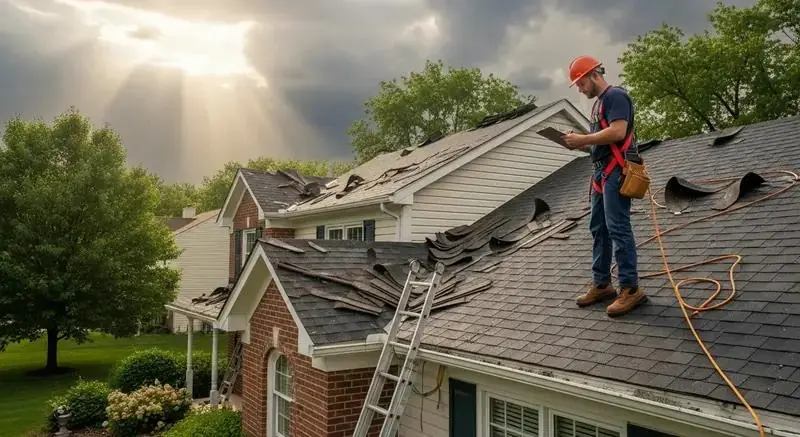
If you're preparing to sell your home in Woodbridge, Dale City, Lake Ridge, Dumfries, or Prince William County, Virginia, an unexpected property damage claim can complicate your plans.
Maybe a storm damaged your roof. Perhaps a pipe burst and caused water damage. Or you filed a homeowners insurance claim and are still waiting for the insurance company to approve the final payment.
Now you're wondering:
"Can I still sell my house if my insurance claim hasn't been settled?"
In many situations, a home sale may still be possible. However, an open insurance claim can affect repairs, negotiations, insurance coverage, and the closing process.
The most important thing is understanding the condition of the property and making clear arrangements about any outstanding repairs and insurance payments.
Here are seven things Woodbridge homeowners should know before listing or closing.
1. Find Out Exactly Where Your Insurance Claim Stands
Before deciding how to sell, start by contacting your insurance company.
An insurance claim can be at several different stages.
For example:
Claim Filed
You've reported the damage, but the insurance company may not have completed its investigation.
Inspection Scheduled
An insurance adjuster is preparing to evaluate the damage.
Coverage Under Review
The insurer is determining whether the damage is covered under your policy.
Claim Approved
The insurance company has approved payment for some or all of the covered damage, subject to policy terms.
Partial Payment Issued
You may have received an initial payment while additional amounts remain outstanding.
Repairs in Progress
A contractor has started work, but the project isn't complete.
Additional Payment Pending
The insurer may be reviewing further documentation or waiting for completed repairs before releasing additional funds.
Why Does the Claim Status Matter?
Imagine you're selling a detached home in Woodbridge.
A windstorm damaged several areas of the roof. You filed an insurance claim, but the adjuster hasn't completed the review.
You now have a buyer who wants to close within 30 days.
The timing could become challenging if the insurer hasn't confirmed the repair scope or payment.
On the other hand, if the claim has been approved and a contractor is scheduled, you may have more information to share with the buyer.
What Should You Ask Your Insurer?
Contact your claims representative and confirm the current status, next steps, remaining documents, and any relevant deadlines.
Also ask whether selling the property before the claim is completed could affect your rights under the policy.
Seller tip: Obtain written confirmation of important claim information rather than relying only on a phone conversation.
2. Determine Whether the Property Damage Has Been Repaired
An open insurance claim is not necessarily the same as an unrepaired house.
For example, you may have completed the repairs but still be waiting for the insurer to issue a final payment.
Alternatively, the claim may remain open because the damage has not yet been repaired.
Those situations can affect the sale differently.
What If the Repairs Are Already Complete?
If the work has been completed, gather documentation showing what was done.
Useful records may include contractor invoices, photographs, inspection approvals where applicable, and warranty information.
If the insurer still owes a payment, ask what is needed to finalize the claim.
What If Repairs Haven't Started?
Obtain a qualified assessment of the damage and written repair estimates.
For example, if your roof sustained storm damage, you may need a roofing contractor to evaluate the condition before determining whether repair or replacement is appropriate.
What If Repairs Are Partially Complete?
Make sure you understand what remains unfinished.
A buyer may ask whether the work will be completed before settlement and who will be responsible for the remaining expenses.
Protect the Property From Further Damage
Virginia's State Corporation Commission advises insured homeowners to take reasonable steps to protect their property from additional loss after damage occurs.
For example, appropriate temporary protection may be necessary if a roof leak exposes the interior to rain.
Keep records and receipts for emergency work, and coordinate with your insurer.
Seller tip: Don't advertise the damage as fully repaired when the contractor is still completing important work.
Accurate information helps buyers evaluate the property.
3. Understand Who Will Receive the Insurance Money
This is one of the most important parts of selling a home with an open claim.
You may have filed the claim before listing the property, but the final insurance payment might not arrive until after closing.
That raises an important question:
"Does the insurance money belong to me, or does it go to the buyer?"
There is no universal answer that applies to every transaction.
The outcome depends on the insurance policy, the applicable law, the mortgage lender's rights, and any properly negotiated agreements.
Does the Insurance Claim Automatically Transfer With the House?
No.
Virginia Code § 38.2-2131 restricts transferring an insured person's claim-related rights, duties, or benefits under a fire insurance policy or a fire insurance policy combined with other coverages.
The law generally requires the insurer's written consent for that type of transfer.
A contract provision violating the law is void and unenforceable.
This means you shouldn't assume that signing a real estate purchase agreement automatically transfers your pending claim to the buyer.
What If the Buyer Wants the Insurance Payment?
If the buyer proposes receiving the proceeds or taking over responsibility for the claim, don't rely on an informal agreement.
Consult your insurance company, settlement professional, and qualified Virginia real estate attorney.
Any permitted arrangement needs to comply with the insurer's requirements and applicable law.
What If You Already Received a Claim Check?
Even if you have received a payment, you may have obligations concerning the repairs or your mortgage.
Insurance payments related to building damage often involve the mortgage lender's financial interest.
The money may also be subject to arrangements established in the purchase contract.
Seller tip: Keep insurance proceeds and home-sale proceeds separate in your planning until the insurer, lender, and settlement professionals clarify what is permitted.
Official Virginia law:
https://law.lis.virginia.gov/vacode/title38.2/chapter21/section38.2-2131/
4. Check Whether Your Mortgage Lender Controls Part of the Claim Payment
If you still have a mortgage on your Woodbridge property, your lender may have a role in the insurance payment process.
This is especially relevant when the claim involves damage to the home itself.
According to Virginia's State Corporation Commission, insurance payments for damage to a mortgaged house may be made jointly to the homeowner and mortgage holder.
The lender may have procedures for endorsing the check and releasing funds for approved repairs.
Why Would the Lender Be Involved?
The lender has a financial interest in the property securing the mortgage.
If a home is damaged, the lender may want to confirm that the property is repaired appropriately.
What Is a Loss Draft?
A loss draft is an insurance payment associated with a covered property loss.
Depending on your mortgage agreement and the claim, the mortgage servicer may require documents before releasing funds.
These could include:
-
Insurance adjuster's estimate
-
Contractor's written repair agreement
-
Proof of repair progress
-
Required inspection information
-
Other documents under the lender's process
What If You're About to Sell?
Contact your mortgage servicer before settlement.
Ask whether any insurance funds are being held, whether repairs must be completed, and how the pending claim will be handled when the mortgage is paid off.
Do not assume that paying off the mortgage automatically resolves every outstanding insurance payment or contractor obligation.
What About Partial Insurance Payments?
Virginia's insurance guidance explains that some replacement-cost claims involve an initial payment followed by an additional amount after qualifying repairs are completed.
Selling before those requirements are met may affect the payment available under the policy.
Ask the insurer to explain the exact terms and deadlines applicable to your claim.
Seller tip: If your claim includes an unpaid replacement-cost amount, confirm its conditions before promising that money to anyone or relying on it to fund the sale.
5. Decide How to Handle Unfinished Repairs Before Closing
What happens if a buyer wants to purchase your home while repairs are still underway?
There are several possible approaches, but the appropriate option depends on the property's condition and the purchase agreement.
Option 1: Complete Repairs Before Closing
You may decide to finish the agreed repairs before settlement.
For example, if your roof needs replacement, you could coordinate the work with the contractor, insurer, and mortgage servicer.
Once the work is finished, you can provide the buyer with relevant documentation.
This may simplify the transaction when the repairs can be completed within the planned timeline.
However, don't promise completion by a particular date unless the contractor and other parties can realistically meet it.
Option 2: Adjust the Purchase Agreement
The buyer and seller may agree on different terms to address unfinished work.
For example, they might negotiate a purchase price adjustment based on the condition of the property.
Any agreement should be documented in writing.
Option 3: Discuss a Permitted Repair Escrow or Holdback
In some transactions, funds may be held for specified work after closing.
However, this type of arrangement is not automatically available.
The buyer's mortgage lender, settlement company, and other relevant parties may need to approve it.
Certain property conditions or loan programs may not permit closing with the work outstanding.
Option 4: Extend the Closing Date
If repairs or claim-related requirements cannot be completed on time, the parties may agree to modify the closing schedule.
The buyer and seller must agree to the change under the applicable contract procedures.
What If the Buyer Wants to Purchase the Property As-Is?
An as-is sale may be possible, but it doesn't automatically settle the insurance claim or eliminate legal obligations.
The contract should accurately reflect the property's condition and agreed responsibilities.
Seller tip: Do not rely on a verbal promise that repairs will be completed after closing. Have the arrangement reviewed and documented properly.
6. Prepare the Insurance and Repair Documents Buyers May Request
When a buyer learns that a property has experienced significant damage, they may have questions.
For example:
"What caused the damage?"
"Was the roof completely replaced or partially repaired?"
"Was there water inside the walls?"
"Are any repairs still outstanding?"
"Is there a warranty?"
Preparing reliable documentation can make these conversations easier.
What Should You Gather?
Insurance Claim Information
The date of loss, type of damage, claim status, and relevant correspondence.
Adjuster's Damage Assessment
The available assessment of covered damage.
Contractor Estimates
Written descriptions of recommended repairs and costs.
Repair Contracts
Documents showing the work the contractor agreed to complete.
Invoices and Receipts
Records of completed work and payments.
Before-and-After Photographs
Photos showing the damage and repairs, where available.
Permits and Inspection Records
Documentation of required approvals for applicable work.
Warranties
Any remaining workmanship or material warranties.
Unfinished Work Summary
A clear description of repairs that remain incomplete.
Should You Share Every Insurance Document?
Not necessarily.
Some documents may contain private financial, policy, or personal information.
Before sharing a full claim file, discuss which documents are appropriate with your real estate professional, insurer, or attorney.
You can provide relevant factual information about property condition without unnecessarily sharing sensitive personal details.
What About a CLUE Report?
A Comprehensive Loss Underwriting Exchange, or CLUE, report contains homeowners insurance claims-history information.
LexisNexis maintains the CLUE Property database, which can contain up to seven years of property claims information.
A seller may request a report for their own property and may choose to share relevant information with a prospective buyer.
Buyers generally cannot simply obtain another person's full consumer claims report without appropriate authorization.
Why Does Claims History Matter?
Buyers often want to know whether a previous damage event could affect future insurance coverage or the property's condition.
However, a past claim doesn't automatically prove that a current problem exists.
For example, an insurance claim for roof damage followed by a documented replacement is different from an unresolved roof leak.
Seller tip: A claims-history report is useful context, but it is not a substitute for a property inspection or repair records.
7. Plan for Buyer Insurance, Inspections, and Settlement
A property insurance claim can raise questions for the buyer's insurer or lender, especially when repairs remain unfinished.
Can the Buyer Obtain Homeowners Insurance?
It depends on the property's current condition and the insurer's underwriting requirements.
An insurer may ask about existing damage, previous claims, or whether repairs have been completed.
The Virginia State Corporation Commission provides guidance on homeowners insurance availability and consumer protections.
Virginia law also limits certain reasons an insurer can use to refuse coverage, including refusing a new applicant solely because of a previous owner's losses.
However, that doesn't mean an insurer must ignore an existing physical hazard or guarantee coverage for every damaged property.
What Should Sellers Do?
Encourage early coordination among the buyer, their insurance agent, and the appropriate transaction professionals.
The buyer may need an insurance policy that satisfies their lender's requirements before closing.
What About the Home Inspection?
The buyer may arrange a general home inspection and specialized inspections for affected areas.
For example, a previous water damage claim might lead to additional questions about moisture, drywall, flooring, or repairs.
An open roof claim may lead to a roofing inspection.
The appropriate inspection depends on the actual damage.
What If New Damage Occurs After the House Is Under Contract?
A new casualty event after contract acceptance can create additional rights and obligations.
The purchase agreement may contain terms addressing property damage before settlement.
Those provisions can affect whether repairs are required, whether the closing is delayed, or what other options are available.
Notify the relevant parties promptly and review the actual contract with your real estate professional or attorney.
Seller tip: Don't cancel your existing property insurance prematurely. Coordinate the proper coverage end date with your insurer and settlement professional.
Does Virginia Require Sellers to Disclose an Open Insurance Claim?
Virginia's Residential Property Disclosure Act generally emphasizes buyer due diligence.
The standard Residential Property Disclosure Statement, effective July 1, 2026, advises buyers to investigate the condition of the property.
However, sellers and real estate professionals must not provide false information about known damage or repairs.
Under Virginia Code § 54.1-2131, seller's real estate licensees must disclose in writing material adverse facts about the property's physical condition that they actually know.
Is Every Insurance Claim Automatically a Material Defect?
No.
Filing an insurance claim does not, by itself, establish that the property currently has a material defect.
For example, a claim for storm damage that has been properly repaired is not the same as an active roof leak.
What matters is the actual condition and the applicable disclosure requirements.
Special Rule for Certain Repeated Flood Claims
Virginia also has a specific affirmative disclosure rule for certain properties with repeated National Flood Insurance Program losses.
Under Virginia Code § 55.1-708.2, an owner who has actual knowledge that a dwelling is a qualifying repetitive risk loss structure must disclose that fact to the buyer on the required form.
For this law, the definition involves two or more NFIP claims, each exceeding $1,000, paid within any rolling 10-year period since 1978.
This is a specific flood-insurance disclosure requirement, not a rule covering every type of homeowners insurance claim.
If your property has a history of repeated flood claims, ask a qualified Virginia real estate attorney whether the requirement applies.
Official resources:
Virginia Property Disclosure Guidance:
https://www.dpor.virginia.gov/Consumers/Residential_Property_Disclosures/
Virginia Repetitive Loss Disclosure Law:
https://law.lis.virginia.gov/vacode/title55.1/chapter7/section55.1-708.2/
Seller tip: Be clear about known property conditions and unresolved repairs. If you're unsure about a legal disclosure obligation, obtain qualified legal advice.
Will an Open Insurance Claim Lower Your Home's Value?
Not automatically.
An insurance claim is an administrative process. The actual property damage and remaining repairs may be more important to buyers than the fact that a claim exists.
For example, a Woodbridge home with a recently replaced roof and complete repair documentation may be evaluated differently from a home with active roof leaks and an unsettled insurance claim.
Potential buyers may consider:
-
The cause and extent of damage
-
Current property condition
-
Repair quality
-
Outstanding work
-
Available documentation
-
Possible insurance complications
-
Closing timeline
-
Comparable property sales
There is no reliable rule that every open insurance claim reduces a home's value by a fixed percentage.
A Comparative Market Analysis can help you evaluate the property's position in the local market.
If repairs remain necessary, obtaining professional estimates can help you develop a realistic pricing strategy.
Frequently Asked Questions About Selling With an Open Insurance Claim
Can I sell my Woodbridge home while an insurance claim is still open?
Potentially, yes. However, the insurer's requirements, property condition, mortgage lender, buyer's financing, and purchase contract may affect the transaction.
Do I have to complete all repairs before closing?
Not necessarily in every transaction. However, the buyer's lender, insurance requirements, and signed purchase contract may require specific work to be completed.
Can I transfer my homeowners insurance claim to the buyer?
Virginia law generally requires the insurer's written consent before transferring claim-related rights under a fire insurance policy or combined policy. Obtain legal and insurer guidance before attempting a transfer.
Who gets the insurance money if the house sells first?
It depends on the policy, lender's rights, and any valid agreements. Do not assume the buyer or seller automatically receives all remaining proceeds.
Can my mortgage lender hold the insurance payment?
Yes, depending on the mortgage and claim. Funds for property repairs may be subject to lender endorsement or controlled disbursement procedures.
Will an open claim delay settlement?
It might, especially if repairs, lender approvals, or insurance arrangements remain unresolved. There is no universal closing delay for every open claim.
Will the buyer have trouble getting insurance?
Possibly, depending on the existing property condition and insurance underwriting. A previous claim alone does not automatically make a property uninsurable.
Should I provide the buyer with my claim documents?
Relevant repair and damage records can be useful, but consider confidentiality and legal requirements before sharing complete policy or claims files.
Does a previous storm damage claim automatically reduce my home value?
No. Its effect depends on the property's condition, completed repairs, and local market evidence.
Thinking About Selling Your Home in Woodbridge, VA?
An open homeowners insurance claim doesn't automatically mean you have to put your home-selling plans on hold.
But it's important to understand the outstanding damage, repair obligations, insurance payments, and closing requirements before moving forward.
Whether your property is in Woodbridge, Dale City, Lake Ridge, Dumfries, or elsewhere in Prince William County, preparing accurate information can help you make more informed decisions.
Josue Ruiz | Ruiz Realty Group helps Northern Virginia homeowners understand their local market, compare properties, and plan their next move.
Wondering What Your Woodbridge Home Could Be Worth?
Start with a free home valuation and discuss your selling goals with Josue.
Visit: https://realtorforvirginia.com/
Josue Ruiz | Ruiz Realty Group | Samson Properties
Call or Text: (703) 975-0021
Your Local Real Estate Resource in Prince William County, Virginia.
Disclaimer: This article provides general real estate information and is not insurance, legal, mortgage, tax, or financial advice. Claim rights, insurance payments, repairs, disclosures, and closing requirements should be reviewed with qualified professionals.
Categories
Recent Posts





"My job is to find and attract mastery-based agents to the office, protect the culture, and make sure everyone is happy! "