
Selling a Home in Dale City, VA With Previous Foundation Repairs? 7 Things to Prepare Before Listing
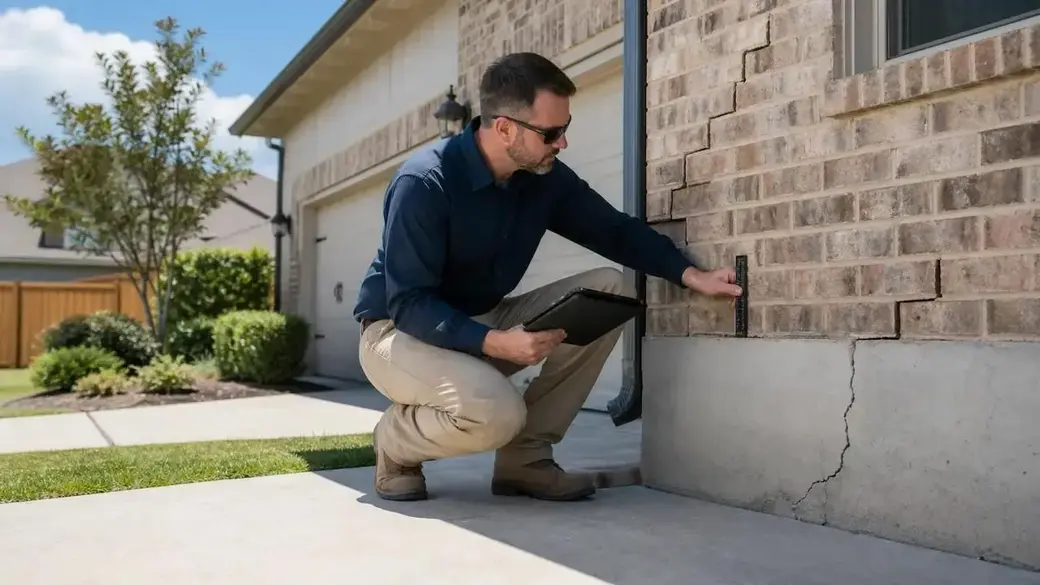
If you're preparing to sell your home in Dale City, Woodbridge, Lake Ridge, or Prince William County, Virginia, you may have a question about repairs completed several years ago.
Perhaps your home had foundation cracks, settling, or another structural concern. You hired a contractor, completed the repairs, and haven't noticed any significant problems since.
Now you're wondering:
"Can I sell my house if it had foundation repairs, and will buyers be worried about the home's history?"
The good news is that previous foundation repairs do not automatically prevent you from selling your property.
However, buyers may want to understand what caused the original problem, how it was repaired, whether permits were required, and whether the work has held up over time.
The more prepared you are, the easier it may be to respond to those questions.
If you're selling a home in Dale City, here are seven important things to prepare before listing.
1. Understand Why the Foundation Was Repaired
Before listing, start by reviewing the original reason for the foundation work.
Not every foundation crack means the same thing.
Some cracks may result from normal material shrinkage or other nonstructural conditions.
Others may involve settlement, soil movement, excessive pressure, water intrusion, or structural problems.
For example, a homeowner might have repaired a minor crack to reduce basement water seepage.
Another homeowner may have installed foundation piers after a professional determined that part of the house was settling.
Those are different situations.
Questions Worth Answering
Ask yourself:
-
What problem was originally identified?
-
Who evaluated the foundation?
-
Was it considered a structural concern?
-
What repair method was recommended?
-
When was the work completed?
-
Have any problems appeared since the repair?
If you have the original inspection report, read it again.
Look for the professional's findings and recommendations rather than relying only on your memory.
Why This Matters in Prince William County
Virginia's Residential Property Disclosure Statement specifically advises buyers to investigate whether a property is located on or near deposits of marine clays, also known as Marumsco soils.
These soil conditions may be relevant to certain properties in Northern Virginia.
However, that does not mean every home in Dale City has problematic soil or foundation movement.
If soil-related movement was identified during your original repair, preserve any supporting geotechnical or engineering reports.
Seller tip: Understanding the original issue helps you explain the repair history accurately without making unsupported claims about the foundation's current condition.
2. Gather All Foundation Repair Records
Documentation is one of the most useful things a homeowner can prepare before selling a property with previous foundation work.
Imagine you're a buyer considering two similar houses.
One seller says:
"We repaired the foundation a few years ago. Everything should be fine."
The other seller has a folder containing the engineering report, contractor invoice, approved permit documents, and warranty information.
The second seller can provide more information about the work that was completed.
What Documents Should You Collect?
Look for:
Original Inspection Reports
These may explain the problem and the findings that led to the repair.
Structural Engineering Reports
If a professional engineer evaluated the property, keep the written findings and recommendations.
Repair Contracts and Invoices
These help identify the contractor, repair date, and scope of work.
Before-and-After Photographs
Photos may show the original condition and what was changed.
Material and Equipment Information
If the contractor installed foundation piers, wall anchors, or other specialized components, keep the relevant specifications.
Permit and Inspection Records
These may confirm that required approvals and inspections were completed.
Warranty Documents
Keep the original warranty and any later service or transfer information.
Follow-Up Reports
If an engineer or contractor returned after the repair, preserve the results.
You may not have every document, particularly if the previous owner completed the work.
Start with what you have, then contact the original contractor or appropriate county office to determine whether additional records are available.
Seller tip: Keep the information organized so that you can respond promptly when buyers request documentation.
3. Check Whether the Foundation Repair Required a Permit
This is especially important for homes in Prince William County.
The county has a written policy addressing structural foundation crack repairs performed after a home's Certificate of Occupancy has been issued.
Under that policy, a professional engineer determines whether a foundation crack is structural.
A building permit is required when a structural foundation crack is repaired after the Certificate of Occupancy.
The policy also generally requires engineering plans and specifications, with a stated plan-review exception for certain approved epoxy-injection repairs.
It includes requirements for an approved third-party engineer to inspect the installation and provide building inspection certification.
Does Every Foundation Crack Repair Require a Building Permit?
Not necessarily.
The county policy specifically addresses structural foundation crack repairs.
The requirements for other work depend on what was done and the applicable building rules.
That's why it's important to confirm the actual scope of your previous repair rather than assume every patch or sealant application needed a permit.
Where Can You Check Permit Records?
Prince William County provides an online ePortal for searching permit and inspection records.
You can visit:
https://www.pwcva.gov/department/development-services/eportal-access
If you find a relevant permit, review its status and whether the required inspections were completed.
If records appear incomplete, contact the county's Development Services department for guidance.
Important: Missing paperwork does not automatically establish that the repair was illegal or improperly performed.
However, if required approvals were not obtained, additional steps may be necessary.
Seller tip: Resolve documentation questions before accepting an offer, rather than waiting until a buyer's inspection or lender review raises concerns.
4. Verify Whether Your Foundation Repair Warranty Transfers
Some foundation repair contractors offer warranties covering specified materials, workmanship, or future movement within the repaired area.
However, warranties vary significantly.
One company might offer a limited warranty for a fixed number of years.
Another may advertise a lifetime warranty but limit the coverage to the original owner or specific conditions.
Some warranties can transfer when the home is sold, while others require additional paperwork or fees.
Questions to Ask the Contractor
Before listing, contact your foundation repair company and ask:
Is the warranty still active?
Confirm the current coverage status.
Can it transfer to the buyer?
Do not assume it transfers automatically.
Is there a transfer deadline?
Some providers require notification within a particular period surrounding the sale.
Are there transfer fees?
Find out whether a payment is required.
Which repairs are covered?
Coverage may apply only to the work originally completed by that contractor.
What could void the warranty?
Certain maintenance failures, unauthorized alterations, or other conditions may affect coverage.
Does the warranty cover future foundation movement?
If so, confirm exactly what the warranty promises.
Why This Matters
Suppose you installed foundation piers several years ago and received a transferable warranty.
A buyer may appreciate having clear documentation about the repairs and any remaining coverage.
However, you should never describe a warranty as guaranteed lifetime protection unless the written terms support that claim.
Seller tip: Obtain written confirmation of transfer eligibility and provide the buyer with the actual warranty terms.
5. Consider a Current Structural Engineering Evaluation
A foundation repair may have been completed several years ago.
Even when you haven't experienced further problems, a buyer may wonder whether the repair is still performing as intended.
Depending on the history, a current evaluation by a qualified structural engineer may be useful.
When Might Another Evaluation Make Sense?
Consider professional advice if:
-
The original repair involved significant structural movement.
-
You notice new or widening cracks.
-
Doors or windows have begun sticking.
-
Floors appear uneven or have changed.
-
Water intrusion has returned.
-
The previous engineering report recommended follow-up monitoring.
-
You have limited documentation about the original repair.
These observations do not automatically establish that the foundation is failing.
Other factors can produce similar symptoms.
An appropriate professional can help investigate the cause.
What Could an Engineering Report Provide?
Depending on the agreed scope, an engineer may review the repair history, inspect accessible areas, document visible conditions, and recommend further investigation when needed.
The report might help clarify whether there are current concerns that should be addressed before listing.
However, a professional evaluation is not a guarantee that the foundation will never experience future movement.
Important: Choose an appropriately licensed professional, and understand the limitations of the inspection.
Virginia's Department of Professional and Occupational Regulation provides an online tool for checking professional licenses:
https://www.dpor.virginia.gov/LicenseLookup/
Seller tip: If you're unsure whether further work is necessary, consider obtaining an independent professional assessment before agreeing to another expensive repair.
6. Address Drainage and Moisture Problems Around the Home
Even after foundation repairs, ongoing property maintenance remains important.
Water accumulating near the foundation can contribute to moisture intrusion and may affect soil conditions.
Poor drainage can also create concerns for buyers, especially when the home has a basement or crawl space.
Before listing, examine the areas around your home.
Gutters and Downspouts
Are gutters clear and functioning properly?
Do downspouts direct water away from the foundation?
Yard Grading
Does the ground appear to slope toward the house?
Are there areas where water regularly collects?
Basement or Crawl Space
Have you noticed water stains, musty odors, or recurring dampness?
Sump Pump
If the home has a sump pump, is it operating and maintained appropriately?
Landscaping
Have changes to patios, planting beds, or hardscaping affected water drainage?
Why This Matters for Previous Repairs
Some foundation repair warranties contain conditions involving proper drainage and ongoing maintenance.
For example, a warranty may limit coverage when later problems result from water accumulation or other conditions excluded by the contract.
Review the actual warranty requirements before making changes.
If you're seeing active water intrusion, arrange for a qualified professional to identify the cause.
Seller tip: Don't simply repaint a stained basement wall or cover a recurring crack without understanding the underlying issue.
Correcting the source of a problem is different from hiding the visible evidence.
7. Prepare an Accurate Pricing and Marketing Strategy
Once you've reviewed the foundation history, documentation, and current condition, think about how the property will be presented to buyers.
Some sellers worry that mentioning previous foundation repairs will automatically reduce their home's value.
However, there is no universal rule that every property with repaired foundation issues sells at a specific discount.
The impact depends on several factors.
These include:
-
The original foundation problem
-
The work that was completed
-
The current structural condition
-
Available permits and inspection reports
-
Warranty coverage
-
Any unresolved concerns
-
Buyer demand
-
Recent comparable sales
For example, a home with an old repaired crack and a clean inspection history may be viewed differently from a home showing new structural movement.
The property's overall condition and market competition also matter.
Should You Advertise the Repairs?
Be accurate and careful with your wording.
If a contractor completed repairs and you have supporting records, you may be able to provide buyers with a factual summary of the work.
Avoid unsupported statements such as:
"Foundation guaranteed perfect forever."
Instead, describe what can be documented, such as the date and type of completed work and the availability of relevant records.
If a warranty is transferable, confirm that fact before advertising it.
Should You Price the Home Lower?
Not automatically.
Before changing your asking price, review comparable sales and consider whether any current issues remain.
A Comparative Market Analysis can help establish a realistic price based on the overall property and local market.
If an engineer identifies an unresolved problem, you may need repair estimates before choosing a pricing strategy.
Seller tip: Your goal is to position the property accurately and give buyers enough reliable information to evaluate it.
Do Virginia Sellers Have to Disclose Previous Foundation Repairs?
Virginia's Residential Property Disclosure Act generally emphasizes buyer due diligence.
The state's standard Residential Property Disclosure Statement, effective July 1, 2026, advises buyers to investigate the condition of a property.
However, that does not mean a seller or real estate agent can knowingly provide false information.
Virginia law also requires a seller's real estate licensee to disclose in writing material adverse facts about the property's physical condition that the licensee actually knows.
Additional requirements may apply in specific circumstances, including certain pending building code enforcement actions.
What If the Foundation Problem Was Fully Repaired?
Whether a particular repair history or remaining condition must be disclosed depends on the facts and applicable legal obligations.
A past repair does not necessarily mean that a current material defect exists.
However, if you know that a significant structural problem remains unresolved, do not assume that describing the sale as "as-is" removes every legal obligation.
If you're uncertain about what must be disclosed, consult a qualified Virginia real estate attorney.
What Should You Avoid?
Avoid making statements about the foundation that cannot be supported by your records or a qualified professional's assessment.
For example, don't claim that all structural problems have been permanently eliminated if you do not have evidence supporting that statement.
A clear, accurate explanation is more useful than an unsupported promise.
Official Virginia resource:
https://www.dpor.virginia.gov/Consumers/Residential_Property_Disclosures
Can a Home With Previous Foundation Repairs Qualify for a Mortgage?
Potentially, yes.
A previous foundation repair does not automatically make a property ineligible for mortgage financing.
However, a buyer's lender or appraiser may identify concerns requiring additional information.
Depending on the loan program and the property's current condition, the lender may request a structural engineering report, evidence of completed work, or additional evaluation.
The requirements depend on the actual property and lender.
A documented repair history may help answer questions, but it does not guarantee financing approval.
Seller tip: Keep your records accessible in case the buyer's lender or appraisal process raises questions.
What If the Buyer Requests Another Foundation Inspection?
This may happen, especially when buyers notice evidence of previous repairs.
A buyer might hire an independent structural engineer to review the property.
Depending on your purchase agreement, the buyer may request access to the repair area or ask for additional documentation.
If the new inspection identifies concerns, review the findings carefully.
You may want to obtain clarification or another qualified opinion before agreeing to substantial work.
Possible outcomes may include negotiated repairs, a price adjustment, or an eligible seller credit.
However, the seller's obligations and the buyer's options depend on the purchase contract.
The best approach is to respond to documented findings rather than assume every buyer concern requires a complete foundation replacement.
Frequently Asked Questions About Selling a Home With Foundation Repairs
Can I sell my Dale City home if the foundation was repaired?
Generally, yes. Previous repairs do not automatically prevent a sale. The property's current condition, documentation, and buyer requirements will affect the process.
Will previous foundation repairs lower my home's value?
Not necessarily. The effect depends on the type of issue, repair quality, current condition, supporting records, and comparable sales.
Do foundation repair warranties automatically transfer to buyers?
No. Transfer rights depend on the contractor's written warranty and any applicable requirements.
Do I need a new engineering report before listing?
Not every seller needs one. However, an updated evaluation may be helpful when the original repair was significant, records are incomplete, or new concerns have appeared.
Can buyers request a foundation inspection?
Yes, buyers may seek a specialized inspection, subject to their contract rights and the agreed access arrangements.
Can I sell a house as-is after foundation repairs?
Potentially. However, selling as-is does not eliminate applicable legal duties or guarantee that a buyer will accept the property's condition.
How do I check whether foundation repairs were permitted?
For homes under Prince William County jurisdiction, review available records through the county's ePortal or contact Development Services.
Should I repair new foundation cracks before selling?
First, have an appropriately qualified professional determine their cause and significance. Not every crack requires structural work, but new or changing conditions may warrant further investigation.
Thinking About Selling Your Home in Dale City, VA?
A history of foundation repairs does not automatically mean your home will be difficult to sell.
What matters is understanding the original problem, documenting the work, evaluating the current condition, and developing a realistic selling strategy.
Whether your home is in Dale City, Woodbridge, Lake Ridge, Dumfries, or elsewhere in Prince William County, knowing how your property compares with the local market can help you make informed decisions.
Josue Ruiz | Ruiz Realty Group helps homeowners understand local property values and explore their selling options in Northern Virginia.
Wondering What Your Dale City Home Could Be Worth After Foundation Repairs?
Start with a free home valuation and discuss your selling goals with Josue.
Visit: https://realtorforvirginia.com/
Josue Ruiz | Ruiz Realty Group | Samson Properties
Call or Text: (703) 975-0021
Your Local Real Estate Resource in Prince William County, Virginia.
Disclaimer: This article provides general real estate information and is not structural engineering, legal, mortgage, or financial advice. Foundation conditions, permit requirements, warranties, and disclosure obligations should be evaluated by qualified professionals.
Categories
Recent Posts







"My job is to find and attract mastery-based agents to the office, protect the culture, and make sure everyone is happy! "