Buying a Home in Dale City, VA With an Older Sewer Line? 7 Things to Check Before Closing
If you're buying a home in Dale City, Woodbridge, Lake Ridge, Dumfries, or Prince William County, Virginia, you're probably paying close attention to the roof, foundation, HVAC system, and other major features.
But there's one important part of the property you might never see during a showing.
It's the underground sewer line.
This pipe carries wastewater from the house toward the public sanitary sewer system.
If the pipe is damaged, blocked, or deteriorating, repairs can be complicated and potentially expensive.
That leads to an important question:
"Should I get the sewer line inspected before buying an older home in Dale City?"
A sewer camera inspection can be a valuable way to investigate the condition of an underground pipe before closing.
However, not every property has the same sewer system, and a camera inspection has limitations.
Here are seven things to check before purchasing a home with an older sewer line.
1. Confirm Whether the Home Uses Public Sewer or a Private Septic System
Before investigating the sewer line, find out what type of wastewater system serves the property.
Some homes in Prince William County connect to a public sanitary sewer system.
Other properties may use private septic systems or different approved wastewater arrangements.
These systems have different components and maintenance responsibilities.
What Is a Sewer Lateral?
For a home connected to public sewer, a sewer lateral is the pipe carrying wastewater from the building toward the public sewer main.
It is often buried beneath the yard or other parts of the property.
Because the pipe is underground, you usually cannot see its condition during an ordinary walkthrough.
What Is the Difference Between a Sewer Lateral and a Septic System?
A public sewer connection generally carries wastewater into a public collection system.
A private septic system typically treats wastewater on or near the property through components such as a septic tank and drain field.
A home inspection for a septic system involves different questions than a sewer lateral inspection.
What Should You Ask Before Buying?
Confirm:
-
Whether the home connects to public sewer
-
Which utility provides sewer service
-
Whether the property has a private sewer arrangement
-
Where the sewer lateral runs
-
Whether a cleanout is available
-
Whether there are shared connections or association responsibilities
Buyer tip: Don't assume every property with a Dale City or Woodbridge address has exactly the same wastewater arrangement.
Start by confirming the specific home's service connection.
2. Consider a Professional Sewer Camera Inspection
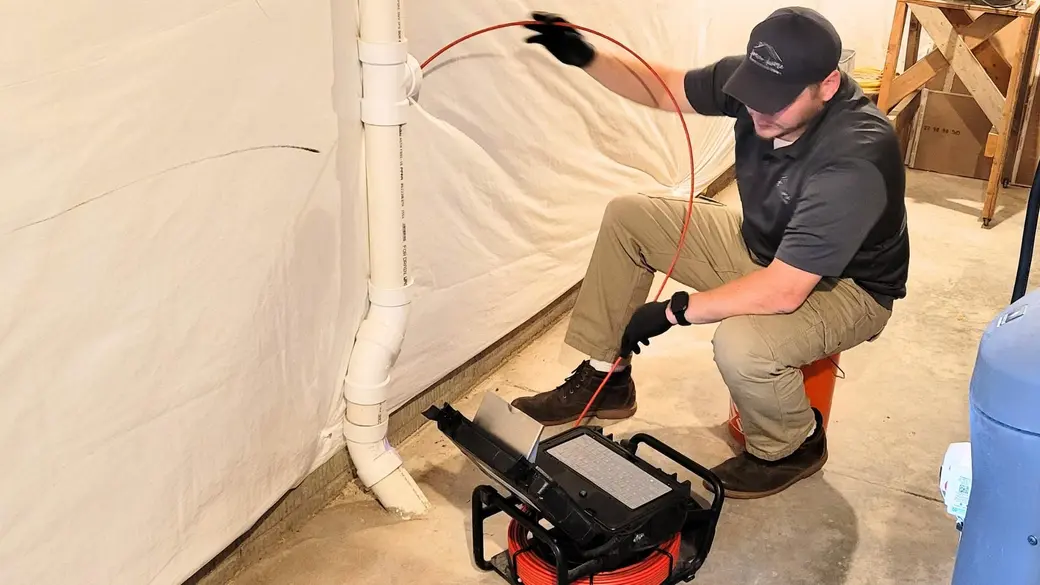
One of the most useful ways to examine an underground sewer line is through a camera inspection.
This service is sometimes called a sewer scope inspection.
A qualified plumbing professional uses a specialized waterproof camera attached to a flexible cable.
The camera is inserted into an accessible part of the drain or sewer line, often through a cleanout.
As it travels through the pipe, the technician reviews the internal condition on a monitor.
What Can a Sewer Camera Identify?
Depending on the quality of access and visibility, a camera inspection may reveal:
Tree Roots
Roots that have entered through joints or damaged sections.
Cracks and Breaks
Visible damage to the interior pipe.
Offset Joints
Sections of pipe that are no longer properly aligned.
Standing Water
Areas where wastewater may collect instead of flowing freely.
Obstructions
Debris, grease buildup, or foreign materials restricting flow.
Pipe Deterioration
Visible signs that the internal pipe surface has become damaged.
Previous Repairs
Changes in pipe materials or other visible evidence of replacement work.
Does a Standard Home Inspection Include This?
Not necessarily.
A general home inspector may test plumbing fixtures, look for accessible leaks, and identify visible drainage problems.
However, a full camera examination of a buried sewer lateral is generally a separate specialized service.
Ask your inspector exactly what is included.
What Are the Limitations?
A sewer camera doesn't guarantee that every part of the pipe can be examined.
For example, the camera may be unable to pass through a severe blockage or damaged section.
A camera may also provide limited information about the surrounding soil or the outside of the pipe.
Buyer tip: Ask for a written report and the inspection video, including which sections were inspected and whether any areas could not be reached.
Arrange the service within your purchase contract's applicable inspection deadlines.
3. Identify the Sewer Pipe Material and Its Condition
Older homes may contain different sewer piping materials depending on when the property was built and whether the system has been repaired or replaced.
Possible materials include:
Cast Iron
Metal piping that can deteriorate or corrode over time.
Vitrified Clay
Clay pipe that can have joint separation or root intrusion concerns.
PVC
A plastic piping material commonly used in more modern sewer installations.
Other Older Materials
Some older systems may contain materials that warrant additional professional evaluation.
Does an Older Pipe Automatically Need Replacement?
No.
A pipe's age alone doesn't establish its condition.
An older line might still be functioning, while a newer installation could have problems caused by poor installation, damage, or ground movement.
For example, imagine you're purchasing an older detached home in Dale City.
The seller says the sewer line has never been replaced.
That information doesn't automatically mean the sewer lateral is failing.
However, it makes sense to investigate the pipe's material and current condition rather than assume it has decades of remaining service life.
What Should You Ask the Plumber?
Ask:
What material appears to be present?
Can the plumber identify the visible pipe type?
Is the pipe in acceptable condition?
Are there findings that require further evaluation?
Does the line show damage?
If so, what type and where?
Is replacement recommended?
If it is, what findings support that recommendation?
Can the remaining life be predicted?
Be cautious about precise predictions. Even an inspection cannot guarantee when an underground pipe will eventually fail.
Buyer tip: Base your decision on documented conditions and professional advice, not simply the property's construction date.
4. Check for Tree-Root Intrusion and Drainage Problems
Mature trees can make a neighborhood attractive.
However, tree roots can sometimes create problems for underground sewer pipes.
Roots may enter existing gaps, joints, or damaged sections of the line.
Once inside, they can grow and restrict wastewater flow.
What Are Possible Warning Signs?
Potential signs of sewer-related problems may include:
Recurring Drain Blockages
Toilets, tubs, or sinks repeatedly become clogged.
Multiple Slow Drains
More than one fixture drains poorly.
Gurgling Sounds
Unusual sounds occur when plumbing fixtures are used.
Sewer Odors
Unpleasant odors appear near drains or certain areas of the property.
Wastewater Backups
Sewage appears in lower-level drains or other fixtures.
Standing Wastewater
A backup or overflow may indicate a serious problem requiring immediate attention.
These symptoms can have more than one cause.
For example, a slow sink may be caused by a local drain blockage rather than a damaged underground sewer lateral.
A qualified plumber can investigate where the problem originates.
What About Trees Near the House?
Don't assume a tree is damaging a sewer line simply because it is close to the property.
The location and condition of the actual pipe matter.
A camera inspection may show whether roots have entered the line.
Is Cleaning the Roots Enough?
Sometimes a plumber may recommend clearing roots or another obstruction.
However, removing roots does not necessarily correct the opening that allowed them to enter.
If the pipe has an underlying defect, the issue may return.
Buyer tip: Ask whether the recommended work addresses only the blockage or also the condition that caused it.
5. Understand Who Is Responsible for Sewer Line Repairs
This is an especially important question for buyers in Prince William County.
Many homeowners assume that because they pay a monthly sewer bill, the utility company is responsible for every underground sewer pipe serving the house.
That isn't necessarily true.
Prince William Water Responsibilities
Prince William Water operates public water and sewer systems in much of Prince William County.
The utility's published policies distinguish public sewer infrastructure from private building laterals and other service connections.
Generally, property owners have responsibility for maintaining their private sewer facilities.
The exact boundary of responsibility can depend on where the pipe is located and whether it forms part of an accepted public facility.
Special provisions may apply to certain portions of sewer service lines within Virginia Department of Transportation rights-of-way.
Why Does This Matter?
Suppose you're buying a house in Dale City.
After closing, the underground sewer line develops a serious blockage.
You discover that the damaged section is part of the property's private lateral.
The repair may be your responsibility rather than the public utility's.
This could involve hiring a plumber, arranging required approvals, and paying applicable repair costs.
What About Townhouses and Condominiums?
Some properties may involve shared sewer infrastructure or association-managed common areas.
Responsibility may depend on:
-
The actual pipe location
-
Whether the pipe serves one or multiple properties
-
Recorded easements
-
HOA or condominium documents
-
Utility ownership records
-
Applicable utility policies
If you're purchasing a townhouse, don't assume the association automatically pays for every underground pipe repair.
Review the relevant documents and ask the utility or association for clarification.
What Should Buyers Confirm?
Before closing, ask:
Who maintains the sewer lateral serving this home?
Where does private responsibility end?
Does the line cross another property or common area?
Are there any shared connections?
Who handles repairs beneath a public street?
Prince William Water provides information about sewer service and cleanouts.
Official resource:
https://princewilliamwater.org/our-customers/how-to/sewer
Buyer tip: Ask for property-specific confirmation when repair responsibility is unclear. Don't rely on assumptions about where the property line ends.
6. Review Sewer Repair History and Permit Records
A seller may have completed sewer repairs before listing the property.
For example, the home might have had an underground pipe replaced after a previous blockage.
Before buying, ask whether any documentation is available.
Records Worth Requesting
Previous Camera Inspection Reports
These may show the condition observed before or after a repair.
Plumbing Invoices
Documents identifying the contractor and completed work.
Sewer Cleaning Records
Information about recurring blockages and maintenance.
Replacement Records
Details of any pipe sections that were replaced.
Permits and Inspection Approvals
Evidence of required authorizations.
Warranty Information
Any written repair warranty and its terms.
Site Plans
Documents that may help identify the sewer line's location.
Are Permits Required for Sewer Lateral Repairs?
Prince William Water's Utility Standards Manual addresses permits for repairing or replacing sanitary sewer laterals outside a building.
Under the utility's published requirements, external sanitary lateral repair or replacement work requires a Prince William Water Lateral Repair or Replacement Permit and an inspection.
Additional local or transportation approvals may apply depending on the work and location.
What If You Can't Find the Records?
Ask the seller whether the original plumbing company can provide documentation.
You can also contact Prince William Water or the appropriate local permitting office.
A missing record doesn't automatically establish that the work was improper.
However, it may be worth investigating, particularly when the repair involved excavation or replacement of underground piping.
Official resource:
Buyer tip: If a contractor says the sewer line has been completely replaced, ask exactly which sections were included.
A repaired portion of pipe is not the same as replacing the entire lateral.
7. Get Written Repair Estimates Before Finalizing the Purchase
If your sewer inspection identifies a problem, the next step is understanding the recommended solution.
Not every sewer line defect requires the same repair.
Some conditions may be addressed through cleaning or localized work.
Others may require significant excavation or replacement.
Common Repair Approaches
Drain Cleaning
Clearing certain obstructions from the line.
Localized Repair
Repairing or replacing a specific damaged section.
Pipe Lining
In certain situations, a qualified contractor may recommend installing a liner inside an existing pipe.
Pipe Bursting
A trenchless replacement method that may be appropriate for certain systems and site conditions.
Traditional Excavation
Digging to access and repair or replace the damaged pipe.
Not every technique works for every sewer lateral.
For example, a severely collapsed or misaligned pipe may require a different approach from one with a limited defect.
What Affects the Repair Cost?
Factors may include:
-
Pipe length and depth
-
Type and extent of damage
-
Soil and site conditions
-
Access to the affected area
-
Driveways, patios, and landscaping
-
Existing underground utilities
-
Required permits and inspections
-
Restoration of disturbed surfaces
A repair beneath a landscaped lawn may involve different costs from work requiring access beneath a driveway or roadway.
What Should You Request?
Obtain a written estimate explaining the problem, proposed method, work included, applicable permits, and estimated total cost.
If the work is substantial, consider obtaining another qualified professional opinion.
Can You Negotiate Sewer Repairs Before Closing?
Potentially.
Depending on the inspection contingency and other terms of your purchase agreement, you may discuss:
Seller-Completed Repairs
The seller agrees to complete specified work before closing.
Purchase Price Adjustment
The parties negotiate a different price.
Eligible Closing-Cost Credit
The seller contributes toward eligible closing expenses, subject to financing requirements.
Proceeding Without Repairs
The buyer accepts the condition after evaluating the risks and expected expenses.
Exercising an Applicable Contractual Right
If the contract permits termination under the circumstances, the buyer may have an option to withdraw within the relevant deadline.
These outcomes aren't automatic.
The buyer's and seller's rights depend on the signed purchase agreement.
Buyer tip: Don't make a major decision based only on a verbal repair estimate. Request written findings and understand the recommended scope of work.
Does Homeowners Insurance Cover Sewer Line Replacement?
This is another important financial consideration.
Some buyers assume that a standard homeowners insurance policy will cover every underground sewer pipe problem.
That is not necessarily the case.
Insurance policies may distinguish between:
Service Line Coverage
Optional coverage that may help pay for certain types of damage to eligible underground service lines, subject to the policy terms.
Water or Sewer Backup Coverage
Coverage that may help with certain resulting damage inside the home when water or sewage backs up, subject to the policy.
These are not interchangeable.
For example, a policy might provide some coverage for damage caused by a backup without paying to replace a deteriorated underground pipe.
Coverage can also depend on the cause of the loss, exclusions, deductibles, and policy limits.
What Should You Ask Your Insurance Agent?
Before closing, confirm whether:
-
Underground sewer service lines are covered
-
Additional coverage is available
-
Sewer backup coverage is included
-
Existing damage or deterioration is excluded
-
Coverage limits are sufficient for your needs
-
Waiting periods or other restrictions apply
Buyer tip: Request written coverage information rather than assuming the policy covers sewer repairs.
Does Virginia Require Sellers to Disclose Sewer Line Problems?
Virginia's Residential Property Disclosure Act generally places significant emphasis on buyer due diligence.
The Residential Property Disclosure Statement effective July 1, 2026, specifically advises buyers to investigate wastewater systems, including associated maintenance, repair, and inspection costs.
However, buyers should not interpret this as permission for sellers or real estate professionals to provide false information.
Other disclosure duties may apply depending on the circumstances.
For example, Virginia law requires seller's real estate licensees to disclose certain material adverse facts about a property's physical condition that they actually know.
If the seller reports previous sewer backups or substantial repairs, request the available documentation.
If you suspect an ongoing issue, arrange a qualified inspection rather than relying only on verbal assurances.
Official Virginia resource:
https://www.dpor.virginia.gov/Consumers/Residential_Property_Disclosures/
Buyer tip: Review the property disclosure information and complete the inspections permitted by your purchase contract before settlement.
Should You Avoid Buying an Older Home With an Original Sewer Line?
Not automatically.
An older sewer line is not necessarily a reason to reject an otherwise suitable home.
Many buyers purchase older properties after investigating their major systems and understanding potential maintenance responsibilities.
However, the decision should be based on the actual condition of the property.
For example, a home with an older sewer lateral that has been professionally inspected may present a different risk from a property with repeated backups and documented pipe damage.
The key questions are:
What is the condition of the pipe?
What does the inspection actually show?
Are repairs needed now?
What might future ownership involve?
Can you afford unexpected repairs?
Does the agreed purchase price reflect the property's condition?
A property can still meet your needs even if it has an older sewer line.
But it's important to understand what you're taking responsibility for when you become the owner.
Frequently Asked Questions About Sewer Line Inspections
Should I get a sewer camera inspection before buying a home in Dale City?
It's worth considering, especially for older homes, properties with mature trees, or houses with a history of drainage problems. A qualified plumber can explain whether an inspection is appropriate.
Does a regular home inspection include the sewer lateral?
Not necessarily. A complete sewer camera inspection is commonly a separate specialized service.
Can a sewer camera detect tree roots?
Yes, if roots are visible within the accessible section of pipe.
Can a sewer line look fine but still have problems later?
Yes. A camera inspection shows conditions that are visible at the time and location inspected. It does not guarantee that future blockages or failures will not occur.
Who is responsible for sewer lateral repairs in Prince William County?
Responsibility depends on the type and location of the pipe and applicable utility or association arrangements. Owners generally maintain private laterals, but you should confirm the property-specific boundary.
Can I buy a home with a damaged sewer line?
Potentially. Review the inspection findings, repair estimates, insurance options, and contractual rights before deciding.
Does the seller have to replace the sewer line?
Not automatically. Any repair obligation depends on the agreed purchase contract and applicable legal requirements.
Is a sewer camera inspection the same as a septic inspection?
No. A sewer camera inspection of a public-sewer lateral evaluates an underground connecting pipe. A septic inspection evaluates a different private wastewater system and may involve additional components.
Thinking About Buying a Home in Dale City, VA?
Buying a home involves more than reviewing the visible features of the property.
Underground systems, including sewer lines, can affect future maintenance responsibilities and unexpected repair expenses.
Whether you're exploring homes in Dale City, Woodbridge, Lake Ridge, Dumfries, or elsewhere in Prince William County, understanding the property's condition can help you make an informed decision.
Josue Ruiz | Ruiz Realty Group helps homebuyers explore available properties, compare neighborhoods, and navigate the Northern Virginia real estate market.
Ready to Find Your Next Home in Prince William County?
Explore available properties and connect with Josue to discuss your homebuying goals.
Visit: https://realtorforvirginia.com/
Josue Ruiz | Ruiz Realty Group | Samson Properties
Call or Text: (703) 975-0021
Your Local Real Estate Resource in Prince William County, Virginia.
Disclaimer: This article provides general real estate information and is not plumbing, engineering, insurance, mortgage, or legal advice. Sewer system conditions, repair responsibilities, permit requirements, and insurance coverage should be confirmed with appropriate qualified professionals and local authorities.
Categories
Recent Posts





"My job is to find and attract mastery-based agents to the office, protect the culture, and make sure everyone is happy! "