
Buying a Home in Woodbridge, VA With a Finished Attic? 7 Things to Check Before Closing
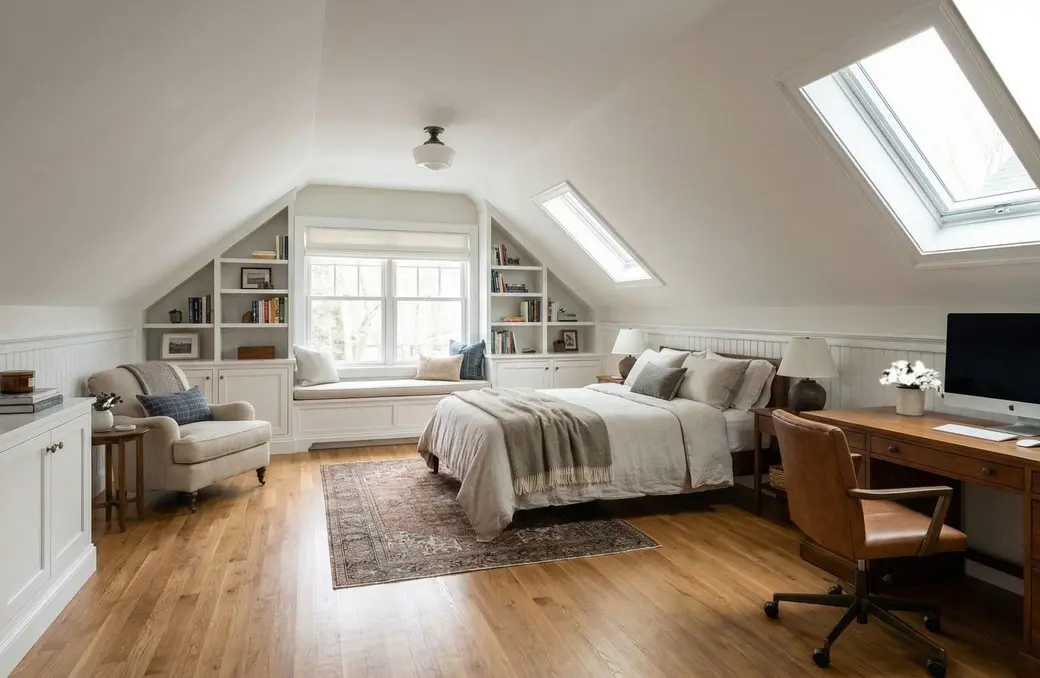
If you're buying a home in Woodbridge, Dale City, Lake Ridge, Dumfries, or Prince William County, Virginia, you may come across a property with an attractive finished attic.
Perhaps it's being used as a home office, guest room, playroom, or additional living space.
The room might have new flooring, painted walls, windows, and even heating and air conditioning.
But before making an offer, there's an important question to ask:
"Does this finished attic actually count as living space, or am I paying for square footage that may not qualify?"
The answer depends on several factors, including ceiling height, access, structural conditions, applicable building requirements, and the measurement standards used by the appraiser.
A finished attic can be a useful feature, but buyers should understand exactly what they're purchasing.
Here are seven things to check before closing.
1. Find Out Whether the Attic Was Approved for Living Space
The first step is understanding how the attic was originally designed and how it is currently being used.
Not every finished attic was intended to be a bedroom, office, or other regularly occupied space.
Some attics were designed mainly for storage or access to mechanical equipment.
Others were constructed or later converted to serve as habitable space.
What's the Difference?
Storage Attic
An area generally intended for storing items or accessing equipment, rather than everyday living.
Finished Attic
An attic with completed interior materials, such as flooring, drywall, and lighting. Finishing the space does not necessarily mean it meets all requirements for habitable use.
Habitable Attic
An attic that meets applicable building requirements for human occupancy.
For example, imagine you're touring a house in Woodbridge with a beautifully decorated attic room.
The seller currently uses it as an office.
However, the original building plans may identify the area as unfinished storage.
That doesn't automatically mean the room is unsuitable, but it's worth investigating whether the conversion was properly approved.
Questions to Ask
Before making an offer, ask:
-
Was the attic originally built as living space?
-
Was it converted later?
-
When was the conversion completed?
-
Were permits and inspections required?
-
What use was approved?
-
Are construction records available?
Buyer tip: Don't assume that attractive finishes mean an attic was legally approved for every possible use.
2. Check Ceiling Height and Usable Floor Area
This is one of the biggest differences between a finished attic and an ordinary upstairs bedroom.
Many attic rooms have sloped ceilings.
They may offer plenty of floor space, but not all of that area necessarily qualifies as habitable floor area or standard finished square footage.
What Does Virginia's Building Code Say?
Under the 2021 Virginia Residential Code, habitable rooms generally require a ceiling height of at least seven feet.
Special provisions apply to rooms with sloped ceilings.
For qualifying sloped-ceiling rooms, at least half of the required floor area must have a ceiling height of seven feet or greater, and the relevant floor area must meet the applicable minimum height requirements.
The code also establishes minimum room dimensions and floor area requirements.
However, the requirements applicable to an existing conversion depend on the building's history, approved plans, and the relevant code provisions.
Why Does This Matter?
Imagine you're considering an attic with a large finished floor.
The room may look spacious in photographs.
But if much of the floor area is beneath a sharply sloped ceiling, the amount of usable living space may be considerably smaller.
That can affect how you use the room.
For example:
Home Office
Can you comfortably place a desk and chair without hitting the sloped ceiling?
Guest Room
Is there enough suitable space for a bed and safe access around it?
Playroom
Are low ceiling areas a concern for the intended users?
Everyday Living Area
Can people move through the space comfortably?
Buyer tip: Consider the actual usable layout rather than relying only on the stated square footage.
Official reference:
https://codes.iccsafe.org/content/VARC2021P2/chapter-3-building-planning
3. Verify Whether the Finished Attic Counts Toward the Home's Square Footage
This is especially important when comparing properties.
A listing might advertise a home as having 2,400 square feet of living space.
However, that figure could include a finished attic that does not meet the measurement standard used for the mortgage appraisal.
How Does Fannie Mae Measure Finished Living Space?
Fannie Mae generally requires appraisers of applicable one-unit properties to follow the ANSI Z765-2021 measurement standard.
For finished areas with sloped ceilings, the standard generally requires at least half of the finished room's square footage to have a ceiling height of seven feet or more.
Areas with ceiling heights below five feet are not counted as qualifying finished area.
Access and other factors also matter.
For example, a finished room reached through an unfinished staircase or passageway may need to be reported separately.
What Happens to Finished Space That Doesn't Qualify?
An appraiser may classify certain areas as nonstandard finished area rather than including them in the standard above-grade finished area total.
That doesn't automatically mean the space has no value.
Fannie Mae requires appraisers to consider the market contribution of applicable nonstandard finished areas when supported by evidence.
A Simple Example
Suppose a Woodbridge home is advertised as having approximately 2,400 square feet.
During the appraisal, the appraiser determines that an attic portion should be reported separately as nonstandard finished space.
The appraisal's standard above-grade finished area may therefore differ from the listing figure.
This doesn't automatically mean the purchase price must be reduced or that the loan will be denied.
However, it may affect property comparisons and the lender's valuation process.
What Should Buyers Do?
Ask your real estate professional to help you understand:
-
How the listing square footage was calculated
-
Whether the finished attic is included
-
Whether a floor plan is available
-
How similar homes were measured
-
Whether the attic's features are reflected in comparable sales
Buyer tip: Don't assume that a listing, a county assessment record, and a mortgage appraisal will always show the same square footage.
Official reference:
https://guide-selling.fanniemae.com/sel/b4-1.3-05/improvements-section-appraisal-report
4. Check the Stairs and Emergency Escape Requirements
A finished attic may look comfortable, but getting in and out safely is essential.
For example, an attic accessed through a pull-down ladder is different from one with a properly constructed permanent staircase.
Why Does Stair Access Matter?
A space designed for regular occupancy may need to meet requirements involving:
Stair Width
The stairs must satisfy applicable dimensional requirements.
Headroom
There must be adequate clearance along the stairway.
Handrails
Required handrails must be properly installed.
Stair Treads and Risers
The steps must comply with applicable construction standards.
Landing and Access
The stairs and doorways must provide appropriate access.
The 2021 Virginia Residential Code also contains requirements for means of egress from habitable attics.
What About Emergency Escape Windows?
Depending on the applicable code provisions, a habitable attic or sleeping room may require an appropriate emergency escape and rescue opening.
This isn't the same as simply having a window.
A window intended for emergency escape must satisfy applicable requirements for operation, size, location, and access.
Certain exceptions may apply depending on the building and its safety systems.
Does a Finished Attic Automatically Qualify as a Bedroom?
No.
A room's use as a bedroom depends on relevant building and safety requirements, not simply whether someone placed a bed inside it.
A room advertised as a bedroom should be reviewed carefully when its approval or safety features are uncertain.
For example, a small finished attic with a low ceiling and access through a folding ladder should not automatically be treated as an approved bedroom.
Buyer tip: If you plan to use the attic as a bedroom, ask the appropriate local building official or qualified professional whether that use is permitted and what documentation supports it.
Don't rely solely on the room description in a real estate listing.
5. Evaluate Heating, Cooling, Insulation, and Ventilation
Finished attics can have different comfort challenges from the main floors of a home.
Because they're located directly beneath the roof, attic rooms may experience significant temperature changes.
For example, a converted attic in Woodbridge might feel comfortable during a mild spring showing but become unusually hot during the summer.
What Should You Check?
Heating
Does the room have an appropriate heating system?
Air Conditioning
Can the space be adequately cooled during warm weather?
Insulation
Was suitable insulation installed as part of the conversion?
Roof Ventilation
Were necessary ventilation paths maintained or appropriately redesigned?
Air Sealing
Are there gaps allowing unwanted air movement?
Moisture
Are there signs of condensation, water stains, or other moisture problems?
Why Is Roof Ventilation Important?
Converting an attic can change the way insulation and ventilation interact with the roof assembly.
An improperly designed conversion may create moisture or comfort problems.
For example, covering existing ventilation openings without an appropriate building design may contribute to unexpected conditions.
The correct solution depends on the roof structure, insulation system, and applicable building requirements.
Can You Install a Window Air Conditioner?
A temporary cooling solution doesn't automatically establish that the finished room meets the applicable requirements for habitable space.
If the room has significant comfort problems, consider obtaining an evaluation from a qualified HVAC or building professional.
Buyer tip: Ask whether the attic was included in the home's original heating and cooling design or whether the system was modified during conversion.
6. Check the Floor Structure and Electrical Work
A finished attic may contain furniture, bookshelves, desks, beds, or other items that add weight to the floor.
But was the original structure designed for that use?
Storage Space vs. Habitable Space
Virginia's Residential Code establishes different structural design loads for various attic uses.
For example, an attic intended for limited storage is not necessarily designed for the same loads as a room used for regular occupancy.
Converting an attic can require structural review or reinforcement, depending on the original construction.
What Should You Look For?
Ask a qualified professional to evaluate any concerns involving:
Floor Movement
Does the floor feel unusually flexible or unstable?
Framing
Were floor joists altered or reinforced during the conversion?
Structural Changes
Were roof supports, braces, or other framing components removed?
Electrical Outlets
Were new circuits or outlets installed appropriately?
Lighting
Are electrical fixtures properly installed for the space?
Smoke Alarms
Are applicable fire safety requirements satisfied?
A general home inspector may identify visible warning signs.
However, a structural engineer or licensed contractor may be needed to assess the adequacy of the original framing.
Why Electrical Records Matter
Attic conversions often involve new lights, outlets, or heating and cooling equipment.
Prince William County identifies work involving structural members and certain electrical, plumbing, and mechanical alterations as activities requiring permits.
Buyer tip: If the finished attic was created during a renovation, ask for records confirming the electrical and structural work.
Official county guidance:
https://www.pwcva.gov/department/building-development-division/do-i-need-permit
7. Review Permit Records Before Making a Final Decision
If you're buying a home with a converted attic, ask when the work was completed.
For example, the seller might explain that the previous owner converted the attic into a bonus room ten years ago.
But no one has the original paperwork.
That doesn't automatically mean the work was unsafe or improperly completed.
However, it may justify additional investigation.
What Documents Should You Request?
Consider asking for:
Building Permits
Documents authorizing the relevant construction work.
Approved Plans
Plans identifying the proposed room use and construction details.
Inspection Records
Evidence of required inspection approvals.
Contractor Invoices
Records showing who completed the work.
Electrical and HVAC Permits
Documentation of relevant trade work, if required.
Engineering Reports
Any available structural evaluations.
Warranty Information
Applicable warranties for the completed work.
Where Can You Check?
For homes under Prince William County jurisdiction, available permit and inspection records may be accessible through the county's ePortal.
Official resource:
https://www.pwcva.gov/department/development-services/eportal-access
You can also contact Prince William County Development Services when documentation is unclear.
Remember that older homes may have been built or altered under different code editions.
A room's compliance should be evaluated based on the property's actual circumstances and applicable requirements rather than assuming every existing attic must meet the same rules as a new conversion today.
Buyer tip: If the attic was finished without required permits, find out what that means before agreeing to purchase the property.
What If the Attic Is Advertised as a Bedroom but Doesn't Qualify?
This is an important situation to address before closing.
Suppose a listing describes a home as having four bedrooms, including one in the attic.
During the inspection or document review, you discover that the attic was previously approved only as storage.
What should you do?
First, verify the facts.
Ask your real estate professional to help obtain the available property information and construction records.
If needed, consult the local building department or a qualified professional about whether the attic's current use is approved.
Next, consider whether the information affects your plans.
For example, if you need four approved bedrooms for your household, an attic that cannot be used as intended may significantly change your decision.
You should also discuss the issue with your lender if it affects the property's description or valuation.
Can You Renegotiate the Purchase?
Depending on your purchase agreement, inspection findings, and applicable contingencies, you may be able to discuss a price adjustment or other arrangement.
If a valid contractual right to terminate applies, that may also be an option.
However, these rights are not automatic.
The important step is identifying the concern and reviewing your contract before the relevant deadlines expire.
Does a Finished Attic Increase a Home's Value?
It can, depending on the quality of the space and how buyers value it.
For example, a professionally finished attic with comfortable access, appropriate heating and cooling, and useful dimensions may appeal to certain homebuyers.
However, a finished attic does not automatically add the same market value as a standard bedroom on the main living levels.
The contribution depends on factors such as:
-
Approved use
-
Quality of construction
-
Room dimensions
-
Access and safety
-
Heating and cooling
-
Usable floor area
-
Local buyer preferences
-
Comparable sales
A qualified appraiser will consider the property's characteristics and relevant market evidence.
Buyer tip: Evaluate what the attic is genuinely worth to you, rather than assuming that every finished square foot has the same value.
Frequently Asked Questions About Finished Attics
Does a finished attic count as living space in Virginia?
Potentially. The room must meet relevant requirements, and its treatment in an appraisal depends on applicable measurement standards. Not every finished attic is included in standard above-grade finished square footage.
Can an attic be considered a legal bedroom?
Possibly, depending on approved use and applicable building and safety requirements. Furnishing the room as a bedroom doesn't automatically make it an approved sleeping room.
Does a finished attic need a permit in Prince William County?
A conversion involving structural changes or regulated electrical, mechanical, or plumbing work can require permits. Confirm the specific work and approvals with the county.
What if the attic ceiling is too low?
Low ceiling height may affect whether an area meets applicable habitable-space or appraisal measurement requirements. A qualified professional can assess the space.
Does a finished attic need a permanent staircase?
A habitable attic must meet applicable means-of-egress requirements. Access through a folding storage ladder should not be assumed to qualify for regular living use.
Can a finished attic affect a home's appraisal?
Yes. Its area may be reported differently if it does not meet applicable measurement requirements. The appraiser may still recognize a market contribution for nonstandard finished space.
Should I hire a separate inspector for an attic conversion?
If there are concerns about framing, insulation, ventilation, electrical work, or approvals, a specialized evaluation may be worthwhile.
Can I buy a home with an unpermitted finished attic?
Potentially, but you should understand the property's condition, approval history, financing implications, and any necessary corrective work before making a decision.
Thinking About Buying a Home in Woodbridge, VA?
A finished attic can be a useful feature, especially when you're looking for flexible space for an office, hobbies, guests, or other needs.
But before paying a premium for that additional room, make sure you understand its actual size, approved use, construction quality, and safety features.
Whether you're exploring homes in Woodbridge, Dale City, Lake Ridge, Dumfries, or elsewhere in Prince William County, investigating these details can help you make a more informed purchase.
Josue Ruiz | Ruiz Realty Group helps homebuyers explore local properties, compare available homes, and navigate the Northern Virginia real estate market.
Ready to Find Your Next Home in Prince William County?
Explore available properties and connect with Josue to discuss your real estate goals.
Visit: https://realtorforvirginia.com/
Josue Ruiz | Ruiz Realty Group | Samson Properties
Call or Text: (703) 975-0021
Your Local Real Estate Resource in Prince William County, Virginia.
Disclaimer: This article provides general real estate information and is not building code, structural engineering, appraisal, mortgage, or legal advice. Room classifications, permits, and property conditions should be verified with the appropriate qualified professionals and local authorities.
Categories
Recent Posts


"My job is to find and attract mastery-based agents to the office, protect the culture, and make sure everyone is happy! "