
Selling a Home in Lake Ridge, VA With Crawl Space Moisture? 7 Things to Check Before Listing
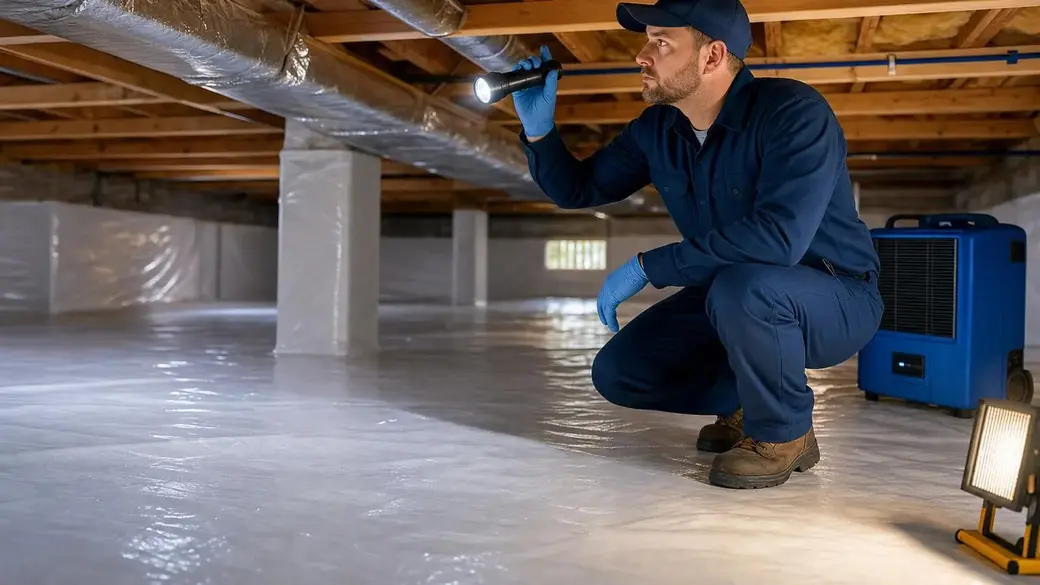
If you're preparing to sell your home in Lake Ridge, Woodbridge, Dale City, Dumfries, or Prince William County, Virginia, you may be focused on cleaning, painting, landscaping, and preparing your property for photographs.
But there's one area homeowners sometimes forget to check: the crawl space.
Perhaps you've noticed a musty smell near the floor, damaged insulation underneath the house, or moisture collecting in the crawl space after heavy rainfall.
Now you're wondering:
"Can I sell my home if the crawl space has moisture problems, or do I need to fix everything before listing?"
Selling may still be possible, but moisture problems deserve attention before your home goes on the market.
A damp crawl space can raise questions about water intrusion, mold, wood deterioration, and future maintenance expenses.
The good news is that identifying the source of the moisture and obtaining appropriate professional advice can help you prepare.
Here are seven things Lake Ridge homeowners should check before listing.
1. Find Out Where the Crawl Space Moisture Is Coming From
The first step is understanding the source of the problem.
Not every damp crawl space has the same cause.
According to the U.S. Department of Energy, crawl space moisture can enter through several pathways, including groundwater, rainwater, air movement, and water vapor traveling through building materials.
Common sources include:
Ground Moisture
Water vapor can rise from exposed soil beneath the home.
Poor Exterior Drainage
Rainwater may collect near the foundation instead of flowing away.
Plumbing Leaks
Leaking supply lines or drains may introduce water into the crawl space.
Condensation
Warm, humid air can create condensation when it encounters cooler surfaces.
Gutters and Downspouts
Clogged gutters or poorly directed downspouts may contribute to water accumulating near the foundation.
Previous Water Intrusion
An older leak or flooding event may have left building materials damp.
Why Does the Source Matter?
Imagine you're preparing to sell your Lake Ridge home and notice wet insulation beneath the floor.
Replacing the insulation might improve its appearance.
But if the actual cause is a plumbing leak or drainage issue, the moisture may return.
Seller tip: Identify and address the water source before spending money on cosmetic improvements.
A qualified crawl space, drainage, plumbing, or building professional can help determine what needs attention.
2. Check for Mold, Musty Odors, and Damaged Materials
Moisture can create conditions that allow mold to grow.
The U.S. Environmental Protection Agency (EPA) explains that moisture control is essential to preventing and addressing mold growth inside buildings.
During a crawl space evaluation, common warning signs may include:
-
Persistent musty odors
-
Visible discoloration on wooden surfaces
-
Damp or fallen insulation
-
Condensation on ducts or pipes
-
Standing water
-
Soft or deteriorating wood
-
Water stains on framing
-
Evidence of recurring leaks
However, these signs do not always establish the same problem.
For example, discoloration on wood does not automatically confirm that mold is present.
A musty odor may also originate from another area of the property.
If you're unsure, arrange an appropriate professional assessment.
Do You Need a Mold Test?
Not every visible mold problem requires laboratory sampling.
According to the EPA, sampling is often unnecessary when mold growth is clearly visible.
The priority is to identify the affected area, address the moisture source, and determine the appropriate remediation.
Testing may be useful in certain situations, particularly when the source is unclear or a qualified professional recommends it.
There is no universal federal indoor mold concentration limit that establishes whether a house passes or fails a mold inspection.
Important: Don't cover a recurring mold problem with paint or spray chemicals and assume it has been solved.
If mold growth is extensive, returns repeatedly, or involves contaminated water, consult an experienced professional rather than attempting to clean the area yourself.
Official EPA resource:
https://www.epa.gov/mold/brief-guide-mold-moisture-and-your-home
3. Inspect the Crawl Space Vapor Barrier
Some homes have a plastic sheet covering the soil in the crawl space.
This is commonly called a ground vapor barrier or vapor retarder.
Its purpose is to help reduce moisture vapor entering the crawl space from the soil.
The U.S. Department of Energy recommends properly installed ground vapor barriers as part of crawl space moisture management.
What Should You Check?
Ask a qualified professional to evaluate:
Coverage
Does the barrier cover the exposed ground as intended?
Damage
Are there large tears, gaps, or missing sections?
Seams
Are the seams overlapped and sealed appropriately?
Edges
Is the barrier properly secured where required?
Standing Water
Is water collecting above or beneath the material?
Other Moisture Sources
Are leaks or drainage problems affecting the area despite the barrier?
Is Encapsulation the Same as a Vapor Barrier?
Not exactly.
A basic ground vapor barrier addresses moisture entering from exposed soil.
Crawl space encapsulation generally involves a more comprehensive approach to sealing and moisture management.
Depending on the system, it may involve wall liners, air sealing, insulation changes, drainage, and mechanical humidity control.
However, not every home needs the same treatment.
A crawl space that already has a functioning moisture-control system may only need specific repairs.
Another property may require more extensive work.
Seller tip: Don't assume that installing an expensive encapsulation system automatically solves every moisture problem.
Have the property's actual conditions evaluated before deciding on the work.
4. Examine Drainage Around the House
Crawl space moisture doesn't always begin beneath the home.
Sometimes the problem starts outside.
For example, rainwater collecting next to a foundation can eventually contribute to moisture problems in the areas below the house.
Before listing, examine the property's exterior.
Gutters
Are gutters damaged, clogged, or overflowing?
Downspouts
Do they discharge water in a way that allows it to drain away from the foundation?
Landscaping
Has soil or landscaping material accumulated against areas of the foundation?
Yard Grading
Does the ground direct surface water toward the house?
Low Areas
Are there locations where water regularly collects after rainfall?
Drainage Equipment
If a drainage or pumping system is present, has it been inspected and maintained?
According to federal building science guidance, appropriate grading and drainage are important parts of protecting crawl spaces from moisture.
What If You Notice Water After Rain?
Document what you observe, including the date and location.
Photographs can help a qualified contractor investigate the problem.
You may need professional advice to determine whether the issue involves surface drainage, underground water, or another source.
Seller tip: Avoid changing the grading or installing drainage improvements without understanding how they may affect neighboring properties and any applicable HOA or local requirements.
5. Have the Crawl Space Structure and Insulation Evaluated
A crawl space is not simply an empty area beneath the home.
Depending on the property's construction, it may contain structural framing, floor joists, supports, insulation, plumbing, and mechanical equipment.
Ongoing moisture can affect some of these components.
For example, damp conditions may contribute to wood deterioration or insulation damage.
When preparing to sell, consider having the relevant components evaluated.
Floor Joists and Framing
Are there signs of decay, significant damage, or unusual movement?
Support Posts and Beams
Are the accessible structural components in appropriate condition?
Insulation
Has insulation become wet, displaced, or damaged?
Plumbing
Are there visible leaks or signs of previous repairs?
HVAC Ductwork
Is there condensation or visible water damage around accessible ducts?
Electrical Components
Are there visible conditions requiring assessment by a qualified electrician?
A general home inspection may identify visible concerns.
However, it may not provide a complete structural or moisture assessment.
If significant damage is suspected, an engineer or another appropriately qualified specialist may be needed.
Important: Do not enter a crawl space with standing water, suspected electrical hazards, unsafe access, or apparent structural instability.
Arrange professional help instead.
What About Permits?
In Prince William County, some home improvements require permits.
For example, the county identifies alterations to structural support members and certain plumbing, electrical, or mechanical systems as work that may require permits.
Routine maintenance and more extensive reconstruction are not necessarily treated the same way.
Before authorizing substantial crawl space repairs, ask the contractor and county whether permits or inspections are needed.
Official resource:
https://www.pwcva.gov/department/building-development-division/do-i-need-permit
6. Prepare Records of Previous Moisture Repairs
When selling a home with a history of crawl space moisture, good documentation can help buyers understand what work has been completed.
For example, suppose a contractor repaired a drainage problem beneath your Lake Ridge home two years ago.
If buyers ask about the crawl space, it may be helpful to provide the relevant work records.
Consider gathering:
Inspection Reports
Documents explaining the original moisture problem and recommended work.
Contractor Invoices
Records showing who completed repairs and when.
Moisture-Control Work
Information about vapor barriers, drainage systems, or encapsulation improvements.
Plumbing Repair Records
Documentation of leaks that were identified and corrected.
Mold Remediation Reports
If professional remediation was performed, retain the applicable scope and completion information.
Follow-Up Inspections
Any available records showing the condition after repairs.
Warranties
Written terms covering installed systems or completed work.
Maintenance Records
Information about ongoing equipment maintenance, if applicable.
What If You Don't Have Any Records?
Contact the original contractor if you know who performed the work.
If the repair required a county permit, ask whether records are available.
If documents cannot be recovered, explain the known history accurately without inventing dates or making unsupported claims.
Seller tip: Avoid telling buyers that a crawl space is guaranteed to be permanently dry unless you have reliable evidence supporting that specific claim.
7. Decide Whether to Repair the Problem Before Listing
Once you understand the moisture issue, you can evaluate your selling options.
Not every crawl space problem requires the same response.
Some conditions may involve relatively limited repairs.
Others may require extensive moisture remediation, drainage improvements, or structural work.
Option 1: Complete Repairs Before Listing
This may make sense when the problem is clearly identified, the work is practical, and completing it could help buyers evaluate the property's condition.
For example, repairing an accessible plumbing leak and replacing damaged insulation may be manageable before marketing the home.
Option 2: Obtain Estimates Before Listing
If the problem is more complicated, consider obtaining professional estimates before deciding what work to complete.
This gives you information about potential costs, timelines, and the scope of repairs.
Option 3: Sell With the Existing Condition
You may choose to market the home in its current condition, subject to applicable laws and accurate representations.
However, buyers may consider the moisture problem when evaluating the property or making an offer.
Option 4: Negotiate Repairs or Credits After Inspection
Depending on the purchase contract, the buyer and seller may negotiate repairs, an adjustment to the purchase price, or an eligible seller credit.
These arrangements are not automatic and depend on the agreed contract terms.
Seller tip: A realistic pricing strategy should consider the home's overall condition, available repair information, and comparable sales.
Do not assume that every crawl space improvement will increase the property's value by the amount spent.
Does Virginia Require Sellers to Disclose Crawl Space Moisture?
Virginia's Residential Property Disclosure Act generally emphasizes buyer due diligence.
The Residential Property Disclosure Statement advises buyers to investigate property conditions, including obtaining appropriate inspections and mold assessments when necessary.
However, the law does not mean that a seller or listing agent may knowingly provide false information.
Virginia Code § 54.1-2131 requires seller's real estate licensees to disclose in writing material adverse facts concerning the property's physical condition that they actually know.
This is especially relevant when a property has an ongoing moisture or mold problem.
What If the Problem Was Previously Repaired?
A completed repair and an ongoing unresolved condition are different situations.
Virginia REALTORS® has published guidance explaining that a recurring mold problem can remain a material adverse fact, even when it has been treated repeatedly.
For example, if mold returns every year because the moisture source has not been corrected, describing the problem as permanently repaired may be misleading.
The legal obligations depend on the actual circumstances.
If you're unsure how to handle a previous or ongoing moisture problem, consult a qualified Virginia real estate attorney.
Official resource:
https://www.dpor.virginia.gov/Consumers/Residential_Property_Disclosures
The goal should be accurate information and appropriate repairs—not hiding a known problem before a home inspection.
Does Crawl Space Moisture Affect Home Value?
It can, depending on the extent of the problem and the property's overall condition.
For example, a crawl space with a small, documented plumbing repair may raise different concerns from one with active standing water and significant wood deterioration.
Potential buyers may consider the available inspection findings, expected repair costs, and future maintenance responsibilities.
However, there is no universal rule that every home with crawl space moisture loses a particular percentage of its value.
A local Comparative Market Analysis can help you compare your property with recent sales and active listings.
For homeowners in Lake Ridge, the appropriate pricing strategy should account for the actual property condition, not simply the fact that it has a crawl space.
Frequently Asked Questions About Selling a Home With Crawl Space Moisture
Can I sell my Lake Ridge home if the crawl space is damp?
Generally, yes. However, the moisture condition, applicable legal obligations, and buyer concerns may affect the selling process.
Do I have to encapsulate the crawl space before selling?
Not automatically. An appropriate moisture-control solution depends on the property's construction and the source of moisture.
Will a home inspector check the crawl space?
A general home inspector may evaluate accessible crawl space areas, but inspections can be limited by unsafe conditions, restricted access, or the inspection scope.
Does a musty smell mean the crawl space has mold?
Not necessarily. A persistent musty odor can indicate a moisture concern, but the cause should be evaluated by a qualified professional.
Do I need a mold test before selling?
Not every home requires mold testing. The EPA advises that laboratory sampling is often unnecessary when mold growth is already visible.
Can a vapor barrier fix a wet crawl space?
A properly installed barrier can help limit moisture vapor from the soil, but it will not necessarily fix plumbing leaks, surface flooding, or other sources of water.
Can buyers request crawl space repairs after an inspection?
Yes. Buyers may request repairs or negotiate other arrangements, depending on the purchase contract. Sellers are not automatically required to accept every request.
Should I repair the crawl space before asking for a home valuation?
Not necessarily. You can begin by obtaining a market assessment and professional repair information, then compare your options.
Thinking About Selling Your Home in Lake Ridge, VA?
Preparing a home for sale involves more than improving its appearance.
Areas such as the crawl space can affect how buyers evaluate the property's condition and future maintenance responsibilities.
By identifying moisture sources, gathering repair documents, and making informed decisions about necessary work, you can prepare for the selling process more effectively.
Whether your home is in Lake Ridge, Woodbridge, Dale City, Dumfries, or elsewhere in Prince William County, understanding its current condition and local market value is an important first step.
Josue Ruiz | Ruiz Realty Group helps local homeowners evaluate their properties, compare recent sales, and explore their selling options in Northern Virginia.
Wondering What Your Lake Ridge Home Could Be Worth?
Start with a free home valuation and discuss your selling goals with Josue.
Visit: https://realtorforvirginia.com/
Josue Ruiz | Ruiz Realty Group | Samson Properties
Call or Text: (703) 975-0021
Your Local Real Estate Resource in Prince William County, Virginia.
Disclaimer: This article provides general real estate information and is not mold remediation, structural engineering, medical, legal, or financial advice. Property-specific conditions should be evaluated by qualified professionals.
Categories
Recent Posts






"My job is to find and attract mastery-based agents to the office, protect the culture, and make sure everyone is happy! "