
Buying a Home in Dumfries, VA With a Whole-House Generator? 7 Things to Check Before Closing
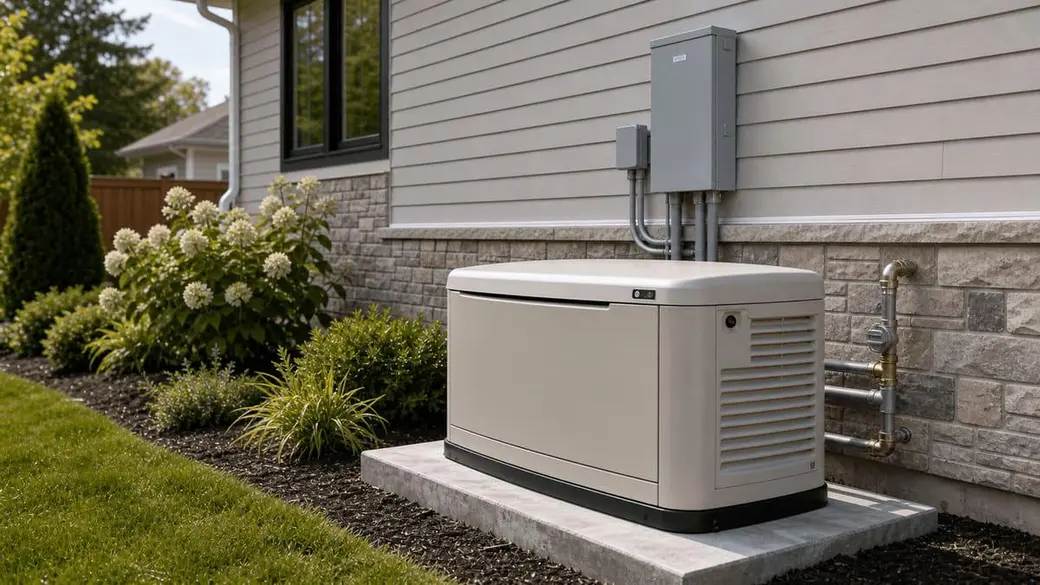
If you're buying a home in Dumfries, Montclair, Southbridge, Potomac Shores, Woodbridge, or Prince William County, Virginia, you may come across a property with a permanently installed backup generator.
At first glance, that sounds like a great feature.
After all, losing electricity during a storm can be inconvenient, especially when you're working from home or relying on essential household equipment.
But before purchasing a home with a generator, there's one important question to ask:
"Does this whole-house generator actually work, and will it power everything I need during an outage?"
The answer depends on the generator's condition, size, electrical connections, fuel supply, and maintenance history.
Just because a property listing says "whole-house generator" doesn't mean every appliance can operate at the same time.
Before closing on a home with a backup generator in Dumfries, here are seven important things to check.
1. Identify the Generator Type and What It Can Power
First, find out exactly what type of generator the home has.
Not all backup power systems work the same way.
Portable Generators
Portable generators are movable units designed to supply electricity to compatible equipment during a power outage.
They require safe outdoor operation and an appropriate electrical connection when supplying household circuits.
A portable generator stored in a garage isn't the same as a permanently installed whole-house generator.
Home Standby Generators
A home standby generator is normally installed outdoors in a fixed location.
Depending on its design, it may use natural gas or propane.
Many standby systems are designed to start automatically when utility power is lost, provided the system is properly installed and operating.
Essential-Circuit Backup vs. Whole-House Coverage
Some generators are configured to power selected circuits.
For example, a system might support:
-
Refrigeration
-
Selected lighting
-
Certain electrical outlets
-
Heating equipment
-
A sump pump
-
Internet equipment
Other systems are designed to supply more of the home's electrical loads.
However, even a generator marketed as providing whole-house coverage has operating limits.
A home may have several high-demand appliances, including electric heating equipment, air conditioning, water heaters, and electric vehicle chargers.
The generator may not be sized to run everything simultaneously.
What Should You Ask?
Request the generator's:
Manufacturer and Model
These details help identify the equipment.
Rated Power Output
Usually expressed in kilowatts, or kW.
Installation Date
This provides context about the system's age.
Electrical Coverage
Which circuits and appliances are connected to backup power?
Load Management Equipment
Does the system automatically limit certain loads to prevent overloading?
Buyer tip: Ask a qualified generator professional to explain exactly what the system can power.
Don't assume that "whole-house" means unlimited electricity during an outage.
2. Check the Generator's Maintenance and Service History
A standby generator is mechanical equipment, and it requires ongoing maintenance.
Even if it hasn't operated during a major outage recently, it may still need regular inspection and servicing.
For example, Generac, a major generator manufacturer, identifies maintenance involving engine oil, filters, batteries, spark plugs, and other components depending on the model.
Service schedules vary by equipment and usage.
What Records Should You Request?
Ask the seller whether they can provide:
Installation Invoice
Information about when and by whom the system was installed.
Routine Service Records
Documentation of inspections and maintenance.
Oil and Filter Changes
Records of completed engine maintenance.
Battery Replacement History
Information about the starting battery.
Repair Invoices
Details of previously identified problems.
Generator Run Hours
Some systems display the number of hours the equipment has operated.
Warranty Documents
Information about remaining coverage.
Why Does Maintenance History Matter?
Imagine you're purchasing a detached home in Montclair.
The seller tells you that the generator was installed eight years ago.
It looks clean and has a protective exterior enclosure.
However, the seller doesn't know when it was last professionally serviced.
That doesn't automatically mean the generator is defective.
But it would be sensible to arrange a professional inspection before relying on the equipment.
What About Automatic Exercise Cycles?
Some standby generators periodically start and run a programmed exercise cycle.
These cycles may help verify certain operating functions.
However, an exercise cycle does not necessarily confirm that the generator can supply the home's electrical loads during an actual outage.
Buyer tip: Ask for the manufacturer's maintenance schedule and compare it with the available service history.
Official manufacturer resource:
https://www.generac.com/home-standby-generators/faq/
3. Have the Generator and Automatic Transfer Switch Inspected
A generator is only one part of a home backup power system.
Another important component is the automatic transfer switch, commonly called an ATS.
What Does an Automatic Transfer Switch Do?
In a properly installed compatible standby system, the transfer switch helps disconnect the relevant circuits from utility power and connect them to generator power during an outage.
When normal utility power returns, the system can transfer the connected loads back.
This process helps prevent dangerous electrical backfeeding.
Backfeeding can create serious electrical hazards, including risks to utility workers and equipment.
What Should a Professional Evaluate?
A qualified generator technician or licensed electrical contractor may check:
Generator Starting
Does the generator start appropriately?
Control Panel
Are there active warnings or fault codes?
Automatic Transfer Switch
Does the switch operate correctly?
Electrical Connections
Are the accessible components in appropriate condition?
Battery and Charging System
Is the starting system operating as intended?
Load Management
Does the generator's setup match the intended household loads?
Connected Circuits
Which parts of the home receive backup electricity?
Should You Ask for a Demonstration?
A professional demonstration may be helpful.
However, don't attempt to simulate a power outage yourself by operating electrical breakers or transfer equipment.
A qualified technician should handle any necessary testing according to the equipment's instructions and applicable safety procedures.
Does a General Home Inspection Include Generator Testing?
Not necessarily.
A general home inspector may identify the presence of a standby generator and note visible concerns.
But a specialized evaluation may be required to test the generator, automatic transfer switch, and supporting systems.
Buyer tip: Before closing, request a written inspection report that clearly identifies what was tested, what was not tested, and any recommended repairs.
4. Verify the Fuel Supply and Expected Operating Costs
Standby generators require a suitable fuel source.
Many residential systems operate using natural gas or propane.
The type of fuel system affects operating costs, maintenance, and how long the generator can supply power during an outage.
Natural Gas Generators
A natural gas standby generator may connect to the property's gas supply system.
Important questions include:
Is the gas supply adequate?
A qualified professional should verify whether the system supports the generator and other applicable gas appliances.
Are the connections properly installed?
Gas piping and associated components should be evaluated by qualified personnel.
Can the generator operate during every outage?
Not necessarily. A generator may depend on a functioning gas supply, and no utility service is guaranteed to remain available during every emergency.
Propane Generators
A propane-powered generator may use a storage tank.
If the property has a propane tank, ask:
Is the tank owned or leased?
A leased tank may involve a separate agreement.
Is the tank included in the sale?
Review the purchase contract and any supplier agreement.
What is the tank's capacity?
Capacity helps determine the potential fuel supply.
When was it last inspected or serviced?
Request available records.
Who supplies the propane?
Understand the service arrangements and refilling requirements.
How Much Does a Generator Cost to Run?
Operating costs depend on fuel prices, generator efficiency, electrical demand, and operating duration.
For example, a generator running only selected essential circuits may consume a different amount of fuel than one supporting several large electrical loads.
Ask for the manufacturer's fuel consumption specifications rather than relying on an unsupported estimate.
What About Maintenance Costs?
Owning a generator also involves future expenses.
These may include routine servicing, battery replacement, repairs, and eventual equipment replacement.
Buyer tip: Treat the generator as a household system with ongoing costs—not as a feature that provides free backup power.
5. Check Outdoor Placement, Ventilation, and Carbon Monoxide Safety
Generator safety is extremely important.
Fuel-burning generators produce exhaust gases that can contain carbon monoxide.
Carbon monoxide, also known as CO, is a poisonous gas that cannot be seen or smelled.
Improper generator placement or operation can create dangerous conditions.
Where Should a Standby Generator Be Installed?
A permanently installed standby generator must be located according to the applicable building requirements, product listing, and manufacturer's installation instructions.
Important considerations include:
Distance From Windows and Doors
The generator should be positioned to reduce the risk of exhaust entering the building.
Air Intakes and Vents
The location of nearby mechanical air intakes matters.
Exhaust Direction
The generator's exhaust must not create unsafe conditions.
Required Clearances
The installation must meet applicable clearance requirements.
Access for Maintenance
Technicians need appropriate access to service the equipment.
Drainage and Ground Conditions
The generator should be supported and installed appropriately for the site.
What Does Prince William County Require?
Prince William County's published Electrical Generators Permits and Inspections policy addresses the placement of generators and their exhaust relative to buildings, mechanical air intakes, and openings.
Electrical or mechanical inspectors may review applicable clearances as part of the permitting process.
Important: Portable and Standby Generators Have Different Placement Requirements
The U.S. Consumer Product Safety Commission advises that portable generators should operate outdoors at least 20 feet from homes, with exhaust directed away from openings.
However, that portable-generator guidance should not be treated as a universal installation distance for every permanently installed standby generator.
Standby generator clearances depend on the specific approved equipment, manufacturer's instructions, and applicable codes.
A qualified installer should evaluate the actual installation.
What About Carbon Monoxide Alarms?
The CPSC recommends installing working carbon monoxide alarms on every level of the home and outside sleeping areas.
Alarms should be maintained and replaced according to their manufacturer's instructions.
If a CO alarm sounds, leave the building immediately and contact emergency services.
Buyer tip: Don't assume a generator is safely installed simply because it has operated without an obvious problem in the past.
Official safety resource:
https://www.cpsc.gov/safety-education/safety-education-centers/carbon-monoxide-information-center
6. Verify Generator Permits and Local Approval Requirements
Before purchasing a home with a permanently installed generator, review the available permit and installation records.
This is especially important around Dumfries because a mailing address does not always identify the property's permitting jurisdiction.
Prince William County Properties
Prince William County has a published policy titled Electrical Generators Permits and Inspections.
For typical residential standby installations, electrical permitting and inspections are important considerations.
The county also identifies gas permit requirements for generators connected to natural gas or propane.
Additional permits may be required for certain fuel storage tanks, structural work, or other installation features.
The policy contains specific exceptions concerning building permits for some generator pads and factory-enclosed equipment.
Therefore, you shouldn't assume that every generator requires exactly the same set of permits.
Official county policy:
https://www.pwcva.gov/assets/documents/development/PP164.pdf
Town of Dumfries Properties
Properties located within the incorporated Town of Dumfries should be checked against the town's own permitting and inspection procedures.
The town publishes an electrical permit application that includes residential stationary equipment such as generators.
Official town website:
How Can You Find the Records?
For a property under Prince William County jurisdiction, begin with the county's ePortal.
https://www.pwcva.gov/department/development-services/eportal-access
For a property within the Town of Dumfries, contact the town's building or permitting office.
What Documents Should You Request?
Ask the seller for:
Installation Permits
Evidence that the relevant work was authorized.
Inspection Records
Confirmation of required inspections.
Electrical Contractor Information
The name of the company that completed the wiring.
Gas Contractor Information
Records of fuel connection work, if applicable.
Approved Site or Installation Plans
Documents showing the equipment's location and installation arrangement, when available.
Manufacturer's Installation Instructions
Useful for confirming applicable specifications.
Does an HOA Need to Approve the Generator?
Possibly.
Some homeowners associations have architectural rules governing permanently installed outdoor equipment.
Restrictions may address placement, appearance, noise, landscaping, or other details.
For example, a home in a planned community may have an approved generator location identified in its architectural records.
If the property has an HOA, ask whether the installation received any required approval.
Buyer tip: Verify the actual property's jurisdiction and association rules before assuming an installation is properly approved.
7. Confirm Ownership, Warranty Coverage, and Future Repair Costs
Before closing, find out exactly what equipment will be included in the sale.
A permanently installed standby generator is different from a portable generator that the seller can move.
However, equipment ownership and what conveys should still be addressed through the purchase agreement.
What Should Be Included?
Depending on the installation and agreement, relevant components may include:
Generator Unit
The outdoor standby generator.
Automatic Transfer Switch
The equipment used to transfer electrical loads between power sources.
Connected Controls
Equipment that forms part of the installed system.
Operating Manuals
Instructions for using and maintaining the generator.
Monitoring Equipment
Any compatible accessories or controls included in the sale.
Fuel Storage Equipment
If applicable, confirm whether a propane tank is owned, leased, or otherwise subject to an agreement.
Does the Warranty Automatically Transfer?
Not necessarily.
Manufacturer warranties differ by product and installation date.
A warranty may have time limits, maintenance requirements, exclusions, or rules governing subsequent owners.
Contact the manufacturer or authorized service provider to verify whether remaining coverage applies to the buyer.
What About Smart Generator Apps?
Some modern generators can connect to a monitoring application.
The current owner may be able to view operating status, notifications, and service reminders.
Before settlement, find out whether the buyer can register the equipment or establish a new monitoring account.
The seller should follow the manufacturer's procedures for handling account access and personal information.
What If the Generator Needs Repairs?
Ask a qualified technician for a written diagnosis and estimate.
Potential repair concerns may involve:
-
Starting battery
-
Control components
-
Engine maintenance
-
Fuel system
-
Automatic transfer switch
-
Sensors
-
Electrical connections
-
Other model-specific components
Can You Negotiate Generator Repairs?
Depending on your contract and inspection findings, you may discuss repairs, a purchase price adjustment, or an eligible closing-cost credit.
However, the seller isn't automatically required to complete every requested repair.
If the generator is a major reason you're buying the home, make sure you understand its condition before your contract deadlines expire.
Buyer tip: A functioning generator with documented maintenance may be more useful than a larger system with an uncertain repair history.
Does a Whole-House Generator Increase Home Value in Dumfries?
A generator may appeal to some homebuyers, especially those who value backup electricity during power outages.
However, it doesn't automatically increase a property's market value by the original installation cost.
The contribution depends on the overall property, comparable sales, buyer demand, and the equipment's actual usefulness.
For example, a properly installed and maintained standby generator could be a desirable feature in a detached home.
But a buyer may evaluate an older generator differently if its maintenance history is missing or major repairs are needed.
Should You Pay More for a Home With a Generator?
Don't assume that every installed system has the same value.
Consider:
Equipment Condition
Does it operate correctly?
System Capacity
Does it support your essential needs?
Documentation
Are installation and maintenance records available?
Future Expenses
Can you afford servicing and eventual replacement?
Local Market Evidence
Do comparable properties support a price difference for the feature?
A real estate professional can help you compare the entire property with competing homes.
What Does Virginia's Property Disclosure Law Mean for Buyers?
Virginia's Residential Property Disclosure Act generally places significant responsibility on buyers to investigate property conditions.
The state's Residential Property Disclosure Statement, effective July 1, 2026, advises buyers to obtain appropriate inspections before settlement.
Receiving a property disclosure statement does not mean the generator has been professionally inspected or guaranteed to operate.
Other legal disclosure duties can apply depending on the facts.
What Should Buyers Do?
Ask whether the generator has experienced problems, whether repairs were performed, and whether maintenance records are available.
If the seller says the generator is operational, consider arranging an appropriate professional test rather than relying solely on that statement.
If you have questions about contract language, disclosures, or repair obligations, consult a qualified Virginia real estate attorney.
Official Virginia resource:
https://www.dpor.virginia.gov/Consumers/Residential_Property_Disclosures/
Frequently Asked Questions About Buying a Home With a Generator
Is a whole-house generator worth having in Dumfries, VA?
It may be a useful feature if you want backup electricity during outages. Its value depends on condition, capacity, installation quality, and your household needs.
Does a whole-house generator power every appliance?
Not necessarily. Some systems power selected circuits, while others support more of the home. Actual capability depends on generator capacity and load management.
Should a standby generator be inspected before buying a home?
A professional evaluation is worth considering, especially if the system's maintenance history is incomplete or the equipment is older.
Does a generator automatically turn on when the electricity goes out?
Many properly installed standby systems are designed to start automatically, but they must be correctly configured, maintained, and operational.
Can a generator run on natural gas or propane?
Many residential standby generators use natural gas or propane, depending on the model and installation. Verify the specific fuel arrangement.
Do standby generators need permits in Prince William County?
Yes, typical installations involve electrical permits, and additional permits may apply to gas connections, fuel tanks, or other work. Requirements depend on the actual installation.
Does a Dumfries address mean the property follows Town of Dumfries permitting rules?
Not always. Verify whether the property is inside the incorporated town or under another local jurisdiction.
Will the generator remain with the house after closing?
Review the purchase contract and any equipment ownership or lease agreements. Never assume every accessory or fuel tank is included.
Can I test the generator myself during a showing?
Do not operate transfer equipment or attempt to simulate an outage yourself. Arrange testing through a qualified professional.
Does a generator guarantee electricity during every emergency?
No. Backup power depends on equipment condition, available fuel, system capacity, and other operating circumstances.
Thinking About Buying a Home in Dumfries, VA?
A permanently installed generator may be an attractive feature, but it's important to understand what you're getting before closing.
Generator capacity, service history, transfer switches, fuel supply, safety, and permit records all deserve attention.
Whether you're looking for a home in Dumfries, Montclair, Southbridge, Potomac Shores, Woodbridge, or elsewhere in Prince William County, learning about the property's major systems can help you make a more informed purchase.
Josue Ruiz | Ruiz Realty Group helps buyers explore homes, compare neighborhoods, and navigate the Northern Virginia real estate market.
Ready to Find Your Next Home in Northern Virginia?
Explore available properties and connect with Josue to discuss your homebuying goals.
Visit: https://realtorforvirginia.com/
Josue Ruiz | Ruiz Realty Group | Samson Properties
Call or Text: (703) 975-0021
Your Local Real Estate Resource in Prince William County, Virginia.
Disclaimer: This article provides general real estate information and is not electrical, mechanical, building code, insurance, legal, or financial advice. Generator installation, safety, permits, operation, and warranty questions should be reviewed with qualified professionals and the appropriate local authorities.
Categories
Recent Posts



"My job is to find and attract mastery-based agents to the office, protect the culture, and make sure everyone is happy! "