
Selling Your Woodbridge, VA Home With an EV Charger? 7 Things to Check Before Listing
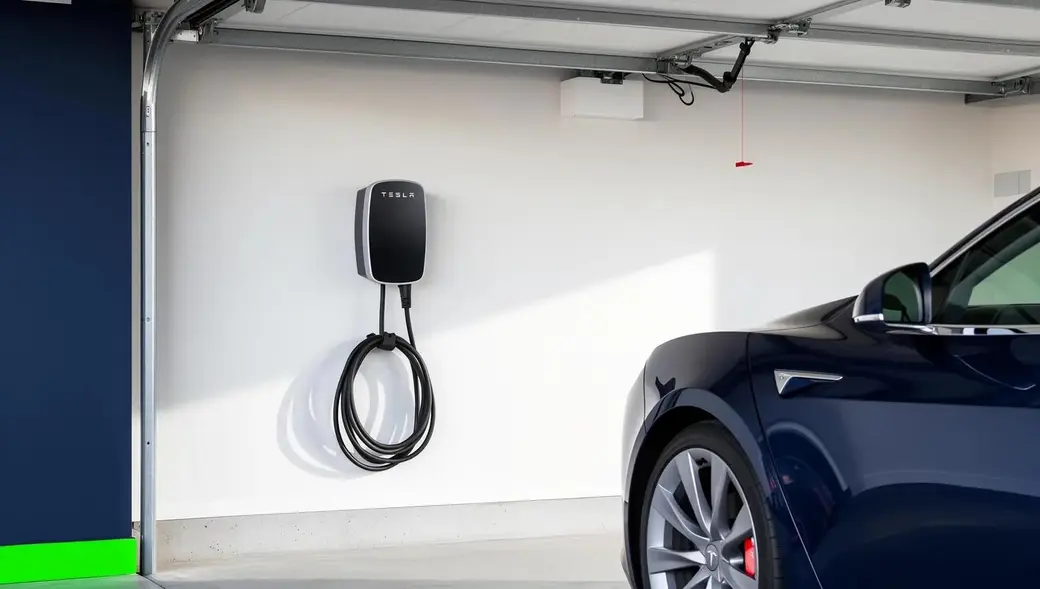
If you're planning to sell your home in Woodbridge, Dale City, Lake Ridge, Dumfries, or Prince William County, Virginia, you might have a feature that wasn't common in many older homes: an electric vehicle charging station.
Maybe you installed a Level 2 charger in your garage after purchasing an electric vehicle. Perhaps the previous homeowner installed one, or you upgraded the electrical system to make the house ready for EV charging.
Now you're wondering:
"If I sell my Woodbridge home, does the EV charger stay with the house? And will it help me attract buyers?"
An EV charger may be a useful feature, particularly for buyers who already drive an electric vehicle or plan to purchase one.
However, selling a home with charging equipment involves more than mentioning it in your property listing.
Before putting your home on the market, here are seven important things to check.
1. Identify What Type of EV Charging Equipment You Have
Not all home EV charging setups are the same.
Before marketing your property, make sure you understand what is installed.
The U.S. Department of Energy identifies Level 1 and Level 2 charging as common options for residential properties.
Level 1 Charging
Level 1 charging generally uses a standard 120-volt household outlet and compatible charging equipment.
It typically provides slower charging than Level 2.
For some electric vehicle owners, this may be sufficient for their daily driving needs.
However, the electrical circuit and outlet must be suitable for the intended charging equipment.
Level 2 Charging
Level 2 charging generally uses a 240-volt electrical supply.
It typically provides faster charging than Level 1, although actual charging speed depends on the vehicle, circuit capacity, and charger settings.
Level 2 equipment may be:
-
Hardwired directly into the home's electrical system
-
Plugged into a compatible, properly installed 240-volt receptacle
A property might also have a dedicated EV charging circuit or outlet without an actual charging station installed.
Why This Matters When Selling
There's a difference between advertising a house as:
EV Charger Installed
A charging station is physically installed and intended to be included with the property.
EV Charging Outlet Available
The home has a suitable receptacle, but the charging equipment itself may not be included.
EV-Ready
The property has certain electrical provisions for possible future charging equipment, but buyers need to verify exactly what is installed.
These descriptions should not be used interchangeably.
Seller tip: Check your equipment's brand, model, electrical rating, and connection type before describing the feature in a listing.
Don't advertise a property as having a Level 2 charger if it only has an ordinary household outlet.
2. Confirm Whether the EV Charger Will Stay With the House
This is one of the most important questions to answer before listing.
Does the electric vehicle charger belong to the home, or can you take it when you move?
The answer depends on the equipment and the terms of the real estate contract.
Wall-Mounted and Hardwired Chargers
A charger permanently installed on a garage wall may be treated differently from a portable charging cable that you keep in your vehicle.
Virginia REALTORS® explains that items attached to real estate are generally considered fixtures, although disagreements can arise.
Importantly, certain Northern Virginia Association of REALTORS® residential sales contract forms expressly identify electric vehicle charging stations as items that convey with the property.
That means a seller using a form containing this provision should not assume they can remove the charger after signing the contract.
What If You Want to Keep Your Charger?
Discuss the situation with your real estate agent before listing.
If you intend to remove the charging station, the listing and purchase agreement should clearly address the exclusion.
For example, the contract may need to distinguish between:
Charging Station
The wall-mounted charging unit you want to keep.
Electrical Circuit
The wiring installed to serve the charger.
Receptacle
A 240-volt outlet that may remain after removing a plug-in charger.
Mounting Hardware
Brackets or other components associated with the installation.
Any removal should be performed safely by an appropriately qualified professional when necessary.
Why Written Agreement Matters
Imagine a buyer tours your Woodbridge townhouse and sees a wall-mounted EV charger in the garage.
The buyer assumes it is included with the home.
After closing, they discover the seller removed it.
That could create a dispute if the purchase contract required the equipment to remain.
Seller tip: Decide what stays and what goes before marketing the property. Have the inclusion or exclusion written clearly in the applicable contract.
3. Check the EV Charger Permit and Inspection Records
If you installed an EV charging station in Prince William County, check whether the necessary approvals were obtained.
The county has specific electrical permitting guidance for residential EV charging systems.
According to Prince William County's Building Development Division, an electrical permit is required when:
A New Circuit or Feeder Is Added
For example, an electrician installs a new electrical circuit to supply a garage EV charging station.
An Existing Circuit or Feeder Is Extended
This can apply when electrical work is completed to reach the charging location.
The EV Charger Is Hardwired
A charger connected directly to the home's electrical wiring requires an electrical permit under the county's published guidance.
What If You Use a Plug-In Charger?
Prince William County states that an electrical permit is not required when the EV charging equipment plugs into an existing circuit that meets the manufacturer's installation instructions.
However, that exception does not automatically apply if the outlet, wiring, or circuit had to be newly installed or modified.
What Documents Should You Gather?
Before listing, look for:
-
Electrical permit records
-
Final inspection information
-
Electrician's installation invoice
-
Manufacturer installation instructions
-
Charger model and electrical specifications
-
Any electrical panel upgrade records
-
Applicable equipment warranties
If your charger was installed by a previous owner, you may need to check available county records.
Prince William County's online ePortal provides access to permit and inspection information.
Official resource:
https://www.pwcva.gov/department/building-development-division/residential-EV-charging-stations/
What If You Can't Find a Permit?
An unavailable document doesn't automatically mean the installation was improper.
However, it may be worth contacting the county or the electrician who completed the work.
Seller tip: Check permits early, particularly if the charging installation involved new wiring or electrical panel upgrades.
4. Make Sure the Charger and Electrical System Are Working Properly
Before presenting an EV charger as an attractive home feature, consider having its condition checked.
Just because the charger turns on doesn't necessarily mean the entire installation is suitable for every vehicle or charging situation.
A qualified electrician can help evaluate the installed equipment and associated electrical components.
What Should Be Checked?
Electrical Connections
Are the charger and relevant wiring in appropriate condition?
Circuit Capacity
Is the installed circuit suitable for the charging equipment and its settings?
Electrical Panel
Does the installation match the available electrical capacity and any applicable design requirements?
Outlet Condition
If the charger plugs into a receptacle, is the receptacle properly installed and suitable for the expected load?
Charging Cable
Are there visible signs of damage or deterioration?
Mounting
Is the unit securely installed?
Outdoor Protection
If the equipment is outside, is it suitable for outdoor installation?
The U.S. Department of Energy recommends using appropriate charging equipment and having qualified electrical professionals assess electrical capacity and installation needs.
Does a Charger Need to Be Replaced Before Selling?
Not necessarily.
A properly functioning charger may not require replacement simply because it has been installed for several years.
However, damaged cables, faulty electrical components, or other identified concerns should be evaluated before buyers rely on the equipment.
Important: Do not attempt to repair, alter, or disconnect hardwired charging equipment yourself unless you are appropriately qualified and authorized to do so.
Seller tip: Keep any service or inspection report available for potential buyer questions.
5. Check Your HOA or Condominium Rules
Many homes in Woodbridge, Dale City, and Lake Ridge are located in communities with homeowners associations.
If your property has an HOA or condominium association, check whether there are requirements affecting EV charging equipment.
What Does Virginia Law Say?
Virginia Code § 55.1-1823.1 addresses electric vehicle charging stations in property owners associations.
Generally, subject to the applicable recorded governing documents, associations cannot simply prohibit a lot owner from installing an EV charging station for personal use on property the lot owner owns.
However, associations may establish reasonable restrictions on exterior charger placement and installation.
Separate provisions apply to condominium properties under Virginia Code § 55.1-1962.1.
Condominium charging arrangements may involve additional considerations involving parking spaces, limited common elements, safety, structural conditions, and electrical infrastructure.
What Should Sellers Verify?
Ask your association or review your records to determine:
Was Architectural Approval Required?
Some installations may have required prior review.
Was Approval Obtained?
Keep documentation of any applicable approvals.
Who Owns the Charging Equipment?
Confirm whether the equipment is privately owned or part of an association-managed arrangement.
Where Is It Located?
A charger in a private garage may raise different questions from one located in shared parking.
Are There Ongoing Fees or Agreements?
Some charging arrangements may include separate electricity, management, or service arrangements.
Why This Matters When Selling
A buyer considering a condominium or townhouse may want to know whether the charging arrangement can continue after closing.
The answer depends on the property, equipment ownership, agreements, and applicable association rules.
Seller tip: Don't promise that a charging station in a shared parking area will automatically transfer to the buyer without checking the applicable documents.
Official Virginia laws:
https://law.lis.virginia.gov/vacode/title55.1/chapter18/section55.1-1823.1/
https://law.lis.virginia.gov/vacode/title55.1/chapter19/section55.1-1962.1/
6. Prepare the Charger for Transfer to the New Owner
Many modern EV chargers include smart technology.
Depending on the model, the charger may connect to Wi-Fi or an online account.
Some allow owners to monitor charging sessions, review energy usage, set charging schedules, or restrict access.
That means preparing the equipment for the buyer may involve more than leaving the charger mounted on the wall.
What Should You Check?
Charger Account
Is the unit registered to your personal account?
Wi-Fi Connection
Does it connect to your home internet network?
User Access
Can the next owner create their own account?
Manufacturer's Instructions
Does the manufacturer provide a process for transferring ownership?
Subscription or Service Plan
Are any paid features connected to your account?
Warranty
Can any remaining equipment warranty be transferred?
Charging Accessories
Which cables or adapters are included in the sale?
Protect Your Personal Information
Before transferring a smart charger, follow the manufacturer's process for removing personal data and account access.
Do not leave your login credentials, payment details, or personal network information available to the buyer.
At the same time, avoid resetting or disconnecting equipment prematurely if the buyer is entitled to receive it in working condition under the contract.
What If the Charger Is Leased or Subject to a Service Agreement?
Review the agreement before advertising the unit as included.
A seller may not have the right to transfer leased equipment without the provider's consent.
The same concern can apply to equipment obtained under certain financing or utility-sponsored arrangements.
Seller tip: Confirm ownership and transfer requirements before accepting an offer.
7. Market the EV Charger Accurately Without Overpricing Your Home
An installed EV charger may be appealing to buyers interested in electric vehicles.
However, the presence of charging equipment does not automatically guarantee a higher selling price.
A home's market value depends on multiple factors, including:
-
Location and neighborhood
-
Property condition
-
Home size and layout
-
Parking and garage features
-
Recent comparable sales
-
Buyer demand
-
Current competing listings
Will an EV Charger Increase Home Value?
It may contribute to buyer interest, particularly among people who want convenient home charging.
However, there is no reliable rule that every EV charger increases a property's value by a specific dollar amount.
For example, you might have spent several thousand dollars upgrading electrical equipment and installing a charging station.
That doesn't mean a buyer will automatically pay the same amount more for the home.
The installation may be useful, but its market contribution needs to be evaluated alongside the entire property.
How Should You Feature It in Your Listing?
If the equipment is installed, operational, and included in the sale, mention it accurately.
For example:
"Garage includes an installed Level 2 EV charging station, subject to the equipment's specifications."
If only a charging outlet is installed, a more accurate description might be:
"Garage includes a dedicated 240-volt receptacle installed for compatible EV charging equipment."
Use only descriptions that can be verified from the actual installation.
Avoid unsupported marketing claims such as:
"Charges every electric vehicle in one hour."
Charging performance depends on the vehicle, charger, electrical supply, and other factors.
Should You Include the Charger in Listing Photos?
Yes, if it's a meaningful feature and included in the sale.
A clean garage photograph showing the installed charging unit can help buyers recognize the feature.
You might also include a closer photograph that shows the charger and its connection arrangement.
Make sure the photograph accurately reflects the equipment that will remain after closing.
Seller tip: A good real estate listing highlights useful features without exaggerating their benefits.
Should You Install an EV Charger Before Selling Your Woodbridge Home?
If your home doesn't already have charging equipment, you might wonder whether installing one before listing is worthwhile.
The answer depends on the expected cost, the home's electrical system, and local buyer preferences.
Consider the Installation Cost
A Level 2 charging station may require additional electrical work.
Depending on the property, a qualified electrician may need to install a circuit, evaluate electrical panel capacity, or complete other improvements.
Consider the Property
A home with an attached garage and suitable electrical infrastructure may have a different installation cost from a property requiring substantial electrical work.
Consider Buyer Demand
Some buyers may appreciate EV charging equipment.
Others may prefer to select a charger based on their own vehicle and needs.
Consider the Timing
If you're planning to list soon, arranging permits and installation could affect your preparation schedule.
Consider Your Selling Strategy
Would the money be better spent on necessary repairs, painting, landscaping, or another improvement?
A real estate professional can help you evaluate the property's current competition and likely buyer priorities.
Important: Don't assume an EV charger is automatically a better pre-listing investment than addressing the home's overall condition.
Frequently Asked Questions About Selling a Home With an EV Charger
Does an EV charger stay with the house when selling in Virginia?
It depends on the equipment and purchase contract. Some Northern Virginia residential sales contract forms expressly include electric vehicle charging stations among the items that convey. Review the actual signed contract.
Can I take my wall-mounted charger when I move?
Possibly, if the equipment is excluded through an appropriate written agreement. Do not remove it without reviewing the contract and arranging any necessary safe electrical work.
Does Prince William County require an EV charger permit?
An electrical permit is required for a hardwired EV charger or when a circuit or feeder is added or extended. Plug-in equipment connected to an existing compliant circuit may qualify for an exception.
Does a home EV charger increase resale value?
It may add appeal for certain buyers, but there is no guaranteed increase in selling price.
Is a 240-volt outlet the same as an installed EV charger?
No. A suitable outlet may support compatible charging equipment, but the charging station itself is a separate component.
Will an EV charger work with every electric car?
Not necessarily. Compatibility can depend on the vehicle, charging connector, adapter, and equipment specifications.
Can an HOA prevent an owner from installing an EV charger?
Virginia law generally limits certain association restrictions, but recorded documents, location, safety requirements, and other conditions can affect a particular installation.
Should I provide the buyer with charger documents?
Yes. Installation records, operating instructions, applicable warranty information, and ownership transfer guidance can be useful.
Thinking About Selling Your Home in Woodbridge, VA?
An installed electric vehicle charger may be a useful feature when preparing your home for the market.
But selling successfully involves more than highlighting an electrical upgrade.
Understanding what equipment stays with the property, confirming permit records, preparing the charger for transfer, and choosing a realistic asking price can help you avoid confusion during the transaction.
Whether you're selling in Woodbridge, Dale City, Lake Ridge, Dumfries, or elsewhere in Prince William County, a local property valuation can help you understand how your home compares with competing listings.
Josue Ruiz | Ruiz Realty Group helps Northern Virginia homeowners evaluate their property's market position and prepare for their next move.
Wondering What Your Woodbridge Home Could Be Worth?
Start with a free home valuation and discuss your selling goals with Josue.
Visit: https://realtorforvirginia.com/
Josue Ruiz | Ruiz Realty Group | Samson Properties
Call or Text: (703) 975-0021
Your Local Real Estate Resource in Prince William County, Virginia.
Disclaimer: This article provides general real estate information and is not electrical, building code, legal, or financial advice. Equipment ownership, permit requirements, contract terms, and installation conditions should be confirmed with qualified professionals and appropriate authorities.
Categories
Recent Posts








"My job is to find and attract mastery-based agents to the office, protect the culture, and make sure everyone is happy! "