
Buying a Home in Nokesville, VA With a Leased Propane Tank? 7 Things to Check Before Closing
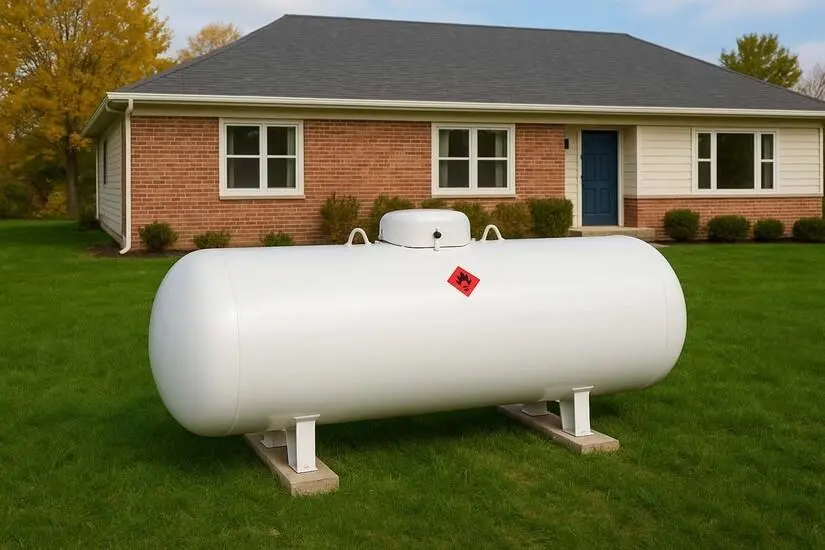
If you're planning to buy a home in Nokesville, Bristow, Gainesville, Manassas, or western Prince William County, Virginia, you may come across a property that uses propane for heating, cooking, hot water, or a backup generator.
You might notice a large propane tank in the backyard or an underground tank identified by a small access cover.
At first, it may seem like another ordinary part of the home's utility system.
But there's an important question you should ask before closing:
"Does the propane tank actually belong to the homeowner, or is it leased from a gas company?"
This matters because buying the house does not necessarily mean you own the propane tank.
If the tank belongs to a supplier, you may need a separate lease or service agreement to continue using it.
You could also face rental fees, fuel delivery requirements, and restrictions on which company can fill the tank.
Before purchasing a property with a leased propane tank in Nokesville, here are seven things to check.
1. Confirm Who Actually Owns the Propane Tank
The first step is establishing ownership.
Residential propane tanks are commonly either privately owned or owned by a propane supplier and leased to the customer.
Homeowner-Owned Propane Tank
If the homeowner owns the tank outright, it may be included in the property sale, depending on the purchase contract.
Owning the tank can provide more flexibility when choosing a propane supplier.
However, the tank owner is also responsible for arranging appropriate maintenance, inspections, and repairs.
Leased Propane Tank
If the propane company owns the tank, the homeowner normally uses it under a separate rental or service agreement.
The supplier retains ownership of the tank even though it is physically located on the property.
The buyer should not assume that it will become their property at closing.
How Can You Verify Ownership?
Ask the seller for:
-
The current tank lease agreement
-
The propane supplier's name and contact information
-
Installation or purchase records
-
Recent fuel delivery statements
-
Any documentation confirming tank ownership
-
Written information about transferring the service
Some tanks display a supplier's name or ownership markings.
However, a label alone may not explain every detail of the agreement.
If the ownership is unclear, ask the supplier to confirm it directly.
Why This Matters in Virginia
Virginia Code § 18.2-494 generally prohibits unauthorized persons from filling or otherwise handling certain propane containers marked with their owner's identification.
Limited exceptions apply during qualifying emergencies.
This means that if the tank belongs to a propane company, you cannot simply assume another supplier can refill it.
Official Virginia law:
https://law.lis.virginia.gov/vacode/title18.2/chapter12/section18.2-494/
Buyer tip: Confirm tank ownership before treating the propane system as an included feature of the home.
2. Review the Propane Tank Lease Before Closing
If the tank is leased, the next step is reviewing the actual agreement.
Not every propane supplier has the same policies.
Some companies charge annual rental fees.
Others may use minimum fuel purchase requirements or different pricing arrangements.
For example, a Virginia propane supplier may allow customers to lease a tank for a relatively small annual fee while requiring a minimum amount of propane to be purchased each year.
If the customer uses less than the required amount, additional charges may apply under the agreement.
What Should You Check?
Annual Rental Fee
How much does it cost to keep the tank on the property?
Minimum Fuel Usage
Are you required to purchase a certain number of gallons each year?
Fuel Pricing
How does the supplier calculate its price per gallon?
Delivery Charges
Are delivery, emergency service, or other fees charged separately?
Lease Duration
How long does the agreement last?
Renewal Terms
Does the agreement renew automatically?
Termination Terms
What happens if you want to stop using the supplier?
Maintenance Responsibilities
Who pays for tank inspections, repairs, or replacement?
Transfer Requirements
Can a new homeowner take over the agreement, or must they apply separately?
Why Minimum Usage Matters
Imagine you're buying a Nokesville home where propane is used only for a fireplace.
The previous owner may have used the fireplace regularly.
You might plan to use it only a few times each winter.
If the propane lease includes an annual minimum purchase requirement, your lower usage could affect what you pay.
That's why it's important to review the terms rather than assume that propane expenses depend only on the amount of fuel you actually consume.
Can You Negotiate the Lease?
Possibly.
Some suppliers may offer alternative arrangements, but the options depend on the company and the existing agreement.
Contact the supplier directly to learn what is available for the specific property.
Buyer tip: Request a copy of the proposed agreement in your own name before agreeing to take over the propane service.
3. Find Out Whether the Lease Can Transfer to You
Buying a home and taking over a propane tank lease are separate matters.
The seller's real estate purchase contract does not automatically guarantee that the propane company will accept you as its new customer.
You may need to complete an account application or sign a new agreement.
What Should You Ask the Supplier?
Before closing, contact the propane company and ask:
Can I Continue Using the Existing Tank?
Confirm whether the supplier will allow service to continue after ownership of the property changes.
Will I Need a New Lease?
Some suppliers may require the buyer to sign an updated agreement rather than taking over the seller's existing contract.
Will There Be a Credit Check or Account Deposit?
Ask about any new-customer requirements.
Does the Supplier Need Advance Notice?
Some agreements require notice before the property changes hands.
Will a Safety Inspection Be Required?
The supplier may require an inspection or other checks before establishing service.
What Happens to the Seller's Outstanding Balance?
Confirm how unpaid charges will be handled and whether they could interrupt service.
A Practical Example
Suppose you're purchasing a detached home in Nokesville.
The seller has leased a propane tank from the same company for several years.
You assume you'll continue receiving deliveries under the seller's existing arrangement.
However, after closing, you learn that the supplier requires a new account agreement and a minimum annual fuel purchase.
Those are costs and obligations you could have reviewed before buying the property.
What Should the Real Estate Contract Address?
The purchase agreement should clearly identify relevant items that are included or excluded from the sale.
If the propane tank belongs to a third-party supplier, that ownership should be accurately communicated.
Any separate arrangements for the remaining fuel, service transfer, or outstanding charges should also be documented appropriately.
Buyer tip: Do not rely on verbal assurances that the propane lease will automatically transfer.
Get confirmation from the supplier and review the applicable agreements before settlement.
4. Check How Much Propane Is Left and Who Pays for It
One expense that can surprise homebuyers is the propane already stored in the tank.
A property may have a nearly full tank, a partially filled tank, or very little fuel remaining.
That can affect your immediate expenses after moving in.
Does the Propane Automatically Come With the House?
Not necessarily.
The treatment of remaining fuel depends on the purchase agreement and any arrangements with the propane supplier.
For example, the contract may specify that the remaining fuel is included in the sale.
In another transaction, the parties may agree to a separate payment based on the amount remaining.
The tank itself may still be leased, regardless of how the fuel is handled.
What Should You Verify?
Ask about:
Tank Capacity
How much propane can the tank hold?
Estimated Remaining Fuel
What does the gauge show, and can the supplier provide a more reliable estimate?
Last Delivery Date
When was the tank last filled?
Recent Fuel Price
What did the seller pay per gallon on recent deliveries?
Fuel Ownership
Who has paid for the propane currently in the tank?
Settlement Terms
How will the remaining fuel be handled at closing?
Why Is This Important?
Imagine you're purchasing a house in November.
The property uses propane as its primary heating fuel.
If the tank is nearly empty, you might need to schedule a delivery soon after moving in.
That could be an additional expense at a time when you're also paying closing costs and moving expenses.
What About an Underground Tank?
The amount of fuel remaining may still be shown through a gauge or monitoring system.
However, the gauge reading is an estimate and should not be treated as a guaranteed measurement.
Ask the supplier how they confirm the quantity when a property changes hands.
Buyer tip: Clarify the treatment of remaining fuel before closing, especially if propane is the home's main heating source.
5. Inspect the Tank, Gas Lines, and Propane Appliances
Before purchasing a property with a propane system, consider arranging an inspection by an appropriately qualified propane service technician.
The propane tank is only one component.
The system may also include regulators, valves, piping, appliances, and other equipment.
What Can a Professional Evaluate?
Tank Condition
Are there visible signs of significant damage, corrosion, or deterioration?
Regulators
Are the installed regulators appropriate and functioning as intended?
Gas Lines
Are accessible connections and piping in suitable condition?
Leak Testing
Is an appropriate system leak check needed?
Appliance Connections
Are the connected appliances properly installed?
Ventilation
Do fuel-burning appliances have appropriate ventilation and exhaust arrangements?
Safety Equipment
Are required or recommended carbon monoxide alarms present?
Service History
When was the system last inspected or repaired?
What About Underground Propane Tanks?
An underground tank presents different inspection considerations from an aboveground tank.
For example, the tank's condition may not be visible during an ordinary home inspection.
A qualified supplier or technician may need to review corrosion protection, underground components, installation records, and other applicable maintenance requirements.
The inspection scope depends on the equipment and applicable standards.
Who Pays for Maintenance?
If the tank is leased, the supplier may be responsible for certain tank repairs or maintenance under the agreement.
However, that does not automatically mean the supplier pays for every gas line or appliance problem inside the house.
The agreement may distinguish between supplier-owned equipment and homeowner-owned components.
Ask for a written explanation of those responsibilities.
What If You Smell Propane?
Propane has an added odor that is often described as similar to rotten eggs.
If you suspect a gas leak, leave the affected area immediately and avoid anything that could create a spark or flame.
From a safe location, call the propane supplier or emergency services.
Do not reenter until qualified personnel confirm it is safe.
Official safety resource:
https://propane.com/safety/safety-articles/what-to-do-if-you-smell-gas/
Buyer tip: Have the propane system evaluated before closing, particularly if maintenance records are missing or the property has been vacant.
6. Review Tank Placement, Permits, and Property Restrictions
Propane tanks must be installed and maintained according to applicable safety requirements.
This includes appropriate tank placement, access, and protection.
For homes in Prince William County, propane storage and related equipment are subject to applicable building and fire safety rules.
The Virginia Statewide Fire Prevention Code addresses liquefied petroleum gas systems and incorporates NFPA 58, an important industry safety standard.
What Should You Check?
Tank Location
Where is the tank installed?
Distance From Structures
Does the installation meet applicable clearance requirements?
Property Lines
Are there any concerns involving the tank's location near neighboring property?
Access for Delivery
Can the supplier reach the tank safely?
Vehicle Protection
Does the location require protection from accidental vehicle impact?
Underground Components
If the tank is buried, are the access points and relevant markings properly maintained?
Previous Alterations
Has landscaping, fencing, or other construction affected the tank's accessibility?
Does Every Residential Propane Tank Need the Same Permit?
No.
Permit and inspection requirements depend on the tank, installation, capacity, location, and work being performed.
Prince William County publishes separate information concerning fuel storage and hazardous use permits.
For example, new installations, alterations, or tank removal may involve different approval requirements.
Don't assume that every small residential propane installation must have the same operational permit used for larger or commercial storage activities.
If you're unsure what was required for a particular property, contact Prince William County Development Services or the Fire Marshal's Office.
Official county resources:
Fuel Storage:
https://www.pwcva.gov/department/building-development-division/fuel-storage
Hazardous Use Permit Information:
https://www.pwcva.gov/department/fire-marshals-office/hazardous-use-permit-information/
What If the Tank Is in an HOA Community?
Some properties may have architectural or landscaping restrictions affecting outdoor equipment.
If an HOA applies, review the governing documents and any relevant approvals.
What Records Should You Request?
Ask for available installation documents, permits, inspection records, site plans, and maintenance reports.
Buyer tip: Confirm the tank's actual installation history and location rather than assuming it meets every requirement because it has been on the property for years.
7. Understand What Happens If You Want to Change Propane Suppliers
This is an important long-term consideration.
You may be comfortable with the seller's current propane company when purchasing the property.
But what if you want to switch suppliers later?
The answer depends heavily on tank ownership.
If You Own the Tank
Owning the tank may give you greater flexibility to compare propane suppliers.
However, a new supplier may still require proof of ownership, an inspection, or account setup before delivering fuel.
If the Supplier Owns the Tank
Switching companies may be more complicated.
Virginia law generally restricts unauthorized filling of a marked propane tank owned by another company, subject to specific exceptions.
This means you cannot simply call a competing supplier and assume they can fill the existing leased tank.
What Are Your Options?
Depending on the lease and supplier policies, you may be able to:
Continue With the Existing Supplier
Keep the tank and establish service under the applicable agreement.
Ask to Purchase the Tank
Some propane suppliers may offer the option of buying the equipment.
Arrange Tank Replacement
The current supplier may remove its tank while a new supplier installs another one.
Discuss Other Arrangements
In some circumstances, companies may cooperate on an equipment transfer, but this is not guaranteed.
What About Cancellation Fees?
A tank lease may include charges associated with ending service.
These could involve termination, tank removal, fuel recovery, or other services.
The actual charges depend on the agreement.
For example, if an underground tank must be removed or replaced, the work may be more complicated than exchanging a standard aboveground tank.
Why Should Buyers Think About This Now?
Imagine you're buying a home that uses propane for heating.
The current supplier offers an acceptable rate today.
Later, you decide to compare prices.
If the tank is leased, your options may be limited by the existing agreement and the need to coordinate a replacement.
Understanding these restrictions before purchasing can help you plan for future expenses.
Buyer tip: Ask the current propane supplier to explain its cancellation and transfer policies before you sign a new lease.
Leased vs. Owned Propane Tank: What's the Difference?
Here's a simple comparison to help homebuyers understand the tradeoffs.
| Consideration | Leased Tank | Owned Tank |
|---|---|---|
| Tank ownership | Propane supplier | Homeowner |
| Initial tank purchase | Usually not required | Owner pays for tank |
| Supplier choice | May be restricted | Generally more flexible |
| Tank maintenance | Depends on lease; often supplier responsibility | Generally homeowner responsibility |
| Lease or minimum-use charges | May apply | No tank lease fee, but other charges may apply |
| Switching suppliers | May require tank removal or transfer | Usually simpler, subject to supplier requirements |
| Property sale | Lease and service arrangements need review | Transfer depends on purchase contract |
Neither arrangement is automatically better for every household.
A leased tank may reduce the upfront cost and make certain maintenance arrangements more convenient.
An owned tank may offer greater supplier flexibility but place more responsibility on the homeowner.
The right choice depends on how much propane you expect to use, the available suppliers, and the actual contract terms.
How Much Does It Cost to Heat a Home With Propane in Nokesville?
There is no single monthly amount that applies to every property.
Propane expenses depend on several factors, including:
Home Size
Larger homes may require more heating energy.
Insulation and Energy Efficiency
A well-insulated home may use less heating fuel than a similar home with significant air leaks.
Heating Equipment
The type and efficiency of the furnace or boiler matter.
Other Appliances
Propane may also fuel a water heater, cooking range, fireplace, or generator.
Weather and Occupancy
Fuel consumption can vary between seasons and households.
Supplier Pricing
The amount charged per gallon can change.
Tank Lease Requirements
Rental fees, minimum purchases, and other charges can affect the total cost.
What Should You Request?
Ask the seller for recent delivery history, ideally covering a full year or more.
This may help you understand historical fuel use.
However, your actual consumption could differ based on your heating preferences, household size, and other factors.
Contact the supplier for current pricing and available delivery plans.
Buyer tip: Compare the home's actual fuel history and the proposed lease terms rather than relying on a general estimate of propane heating costs.
What Does Virginia's Property Disclosure Law Mean for Propane Tanks?
Virginia's Residential Property Disclosure Act generally emphasizes buyer due diligence.
The state's standard Residential Property Disclosure Statement advises buyers to investigate property conditions and seek professional evaluations when necessary.
However, a propane tank lease creates a separate ownership and contract issue.
Buyers should make sure they understand what equipment belongs to the seller, what belongs to a third party, and what is included in the property sale.
Sellers and real estate professionals must also comply with applicable duties concerning accurate representations and certain known material adverse facts.
What If the Listing Says the Tank Is Included?
Ask for clarification.
A supplier-owned tank may be physically present on the property without being owned by the seller.
If the seller does not own the tank, the real estate contract should not incorrectly describe it as equipment the seller can transfer outright.
If there is a dispute or uncertainty about ownership, lease obligations, or transfer rights, seek advice from an appropriately qualified Virginia real estate attorney.
Official resource:
https://www.dpor.virginia.gov/Consumers/Residential_Property_Disclosures/
Frequently Asked Questions About Leased Propane Tanks
Does a leased propane tank automatically come with the house when I buy it?
No. The tank may remain the property of the propane supplier. You may need a separate agreement to continue using it.
How do I know who owns the propane tank?
Review the seller's lease and purchase records, check any tank ownership markings, and ask the current supplier for written confirmation.
Can I use another propane company to fill a leased tank?
Generally, not without authorization from the tank owner when the container bears the owner's markings. Virginia law provides limited exceptions for qualifying emergencies.
Do propane companies charge annual tank rental fees?
Some do. Other arrangements may involve minimum fuel purchases or different charges. Review the specific agreement.
Can a propane tank lease be transferred to the homebuyer?
Possibly, but transfer procedures depend on the supplier and lease terms. A new customer agreement may be required.
Who pays for propane already in the tank at closing?
The answer depends on the purchase agreement and any applicable supplier arrangements. Clarify this before settlement.
Can I buy a leased propane tank from the supplier?
Some companies offer that option. Ask the supplier whether the tank is available for purchase and what the terms would be.
Are underground propane tanks more complicated?
They can involve additional inspection, corrosion protection, access, and removal considerations. A qualified propane professional should evaluate the specific system.
Does Prince William County require permits for propane tanks?
Requirements vary depending on the installation, tank capacity, and work involved. Contact the county to confirm property-specific requirements.
Should I get a propane inspection before closing?
A professional inspection is worth considering, particularly when maintenance records are incomplete or the system's condition is uncertain.
Thinking About Buying a Home in Nokesville, VA?
A propane tank may be a useful part of a property's heating or backup power system.
But if the tank is leased, it's important to understand the financial and contractual responsibilities before purchasing the home.
Tank ownership, lease terms, fuel costs, installation records, and maintenance responsibilities can all affect your experience as a homeowner.
Whether you're exploring properties in Nokesville, Bristow, Gainesville, Manassas, or western Prince William County, investigating these details can help you avoid unexpected expenses after closing.
Josue Ruiz | Ruiz Realty Group helps Northern Virginia homebuyers explore available properties, compare neighborhoods, and navigate the buying process.
Ready to Find Your Next Home in Prince William County?
Explore available properties and connect with Josue to discuss your homebuying goals.
Visit: https://realtorforvirginia.com/
Josue Ruiz | Ruiz Realty Group | Samson Properties
Call or Text: (703) 975-0021
Your Local Real Estate Resource in Prince William County, Virginia.
Disclaimer: This article provides general real estate information and is not propane safety, building code, insurance, legal, or financial advice. Tank ownership, leases, permits, and system conditions should be verified with qualified professionals and the appropriate authorities.
Categories
Recent Posts





"My job is to find and attract mastery-based agents to the office, protect the culture, and make sure everyone is happy! "