
Buying a Home in Manassas, VA With a Fireplace? 7 Chimney and Safety Checks Before Closing
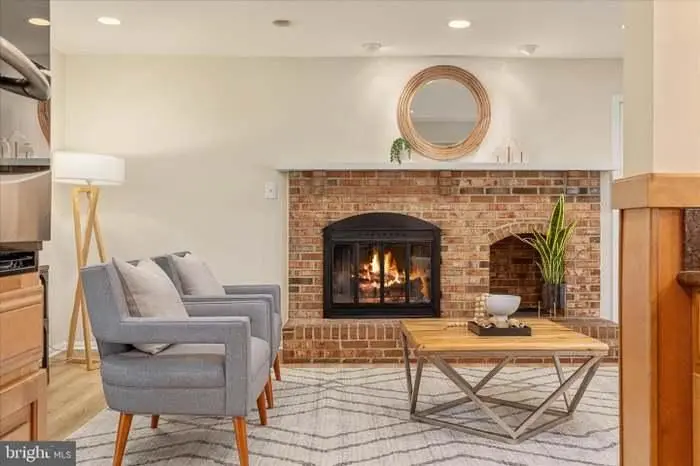
Buying a home in Manassas, Manassas Park, Bristow, Gainesville, or Prince William County, Virginia often means looking for features that make a property comfortable and inviting.
For some homebuyers, a beautiful fireplace is one of those features.
A brick fireplace can become the centerpiece of a living room, especially during Northern Virginia's colder months.
But before purchasing a home with a fireplace, there's an important question to ask:
"How do I know if the fireplace and chimney are safe to use, or if they need expensive repairs?"
A fireplace may look beautiful during a home showing, but that doesn't automatically mean its chimney, ventilation system, and internal components are in good condition.
Some problems are difficult to see without a professional inspection.
Before buying a home with a fireplace in Manassas, here are seven important things to check.
1. Find Out What Type of Fireplace the Home Has
Not all fireplaces operate the same way.
Before making an offer, find out exactly what type of fireplace is installed.
Common types include:
Wood-Burning Fireplaces
These burn firewood and generally require an appropriate chimney and flue to carry combustion gases outside.
Gas Fireplaces
These use natural gas or propane. Some are vented through a chimney or dedicated vent system, while others have different configurations.
Gas Log Sets
These may be installed in an existing fireplace and can have specific operating and ventilation requirements.
Electric Fireplaces
These generally create a flame-like visual effect without burning fuel. They do not need a combustion chimney, but electrical condition and installation still matter.
Fireplace Inserts
These are appliances installed within an existing fireplace opening. They may burn wood or gas and require appropriate venting.
Why Does the Fireplace Type Matter?
Different fireplaces have different maintenance needs, safety considerations, and inspection requirements.
For example, a wood-burning masonry fireplace may need an evaluation of its flue liner and chimney structure.
A gas fireplace may require inspection of its burner, ignition system, gas connections, and venting.
Buyer tip: Ask the seller what type of fireplace is installed and whether it is currently operational.
Don't assume that every fireplace shown in listing photographs is ready to use.
2. Request a Professional Chimney Inspection
A general home inspection is an important part of purchasing a house.
However, a home inspector may only evaluate readily visible fireplace and chimney components.
The inspector may identify concerns such as damaged masonry or a missing chimney cap without fully examining the internal flue.
That's why a separate chimney inspection may be worthwhile.
What Is a Level 2 Chimney Inspection?
The Chimney Safety Institute of America (CSIA) explains that chimney inspections have different levels based on the circumstances.
A Level 2 inspection is recommended when a property is being sold or transferred.
It generally involves a more detailed evaluation than a basic visual inspection.
Depending on the system and accessibility, a Level 2 inspection may include:
-
Accessible fireplace components
-
Chimney exterior and interior
-
Flue liner condition
-
Accessible attic and basement areas
-
Accessible crawl spaces
-
Appropriate internal video examination
-
Connected appliances and venting components
The purpose is to identify conditions that could affect the safe operation of the fireplace or chimney.
Important: A CSIA recommendation is an industry safety standard, not a blanket Virginia law requiring every seller to provide a Level 2 inspection.
If the seller has not recently had the chimney inspected, consider arranging an evaluation by a qualified chimney professional.
Official resource:
https://www.csia.org/homeowner-resources
Buyer tip: Discuss the inspection early so the work can be completed before your applicable purchase contract deadlines.
3. Look for Cracks, Water Damage, and Chimney Deterioration
Chimneys are exposed to changing weather conditions throughout the year.
Rain, moisture, temperature changes, and aging materials can gradually affect their condition.
When viewing a property, look for visible warning signs.
These may include:
Cracked Bricks or Mortar
Damaged masonry may indicate deterioration that requires professional evaluation.
Water Stains
Discoloration near the fireplace or chimney can be a sign of moisture intrusion.
Damaged Chimney Crown
The crown is the top surface that helps direct water away from the chimney structure.
Missing or Damaged Chimney Cap
A chimney cap helps limit rainwater, debris, and animal entry.
Deteriorating Flashing
Flashing seals the area where the chimney meets the roof. Problems can allow water intrusion.
Interior Cracks
Cracks in the firebox or visible masonry may require inspection to determine their significance.
For example, imagine you're touring an older home in Manassas.
The living room has a beautiful brick fireplace, but you notice a brown stain on the ceiling near the chimney.
That stain doesn't automatically establish the cause.
However, it may justify closer inspection of the chimney, flashing, and surrounding roof.
Buyer tip: Cosmetic repairs do not always address the source of chimney water damage.
If concerns are identified, request a professional diagnosis before deciding how to proceed.
4. Check for Creosote and Chimney Fire Risks
If the fireplace burns wood, creosote is an important safety consideration.
Creosote is a combustible deposit that can build up inside chimneys when wood-burning byproducts accumulate.
Excessive buildup can contribute to chimney fires.
The U.S. Fire Administration recommends having chimneys professionally inspected and cleaned annually.
The Chimney Safety Institute of America also recommends regular professional inspections and cleaning when necessary.
What Should Buyers Ask?
If the seller has used the fireplace, consider asking:
-
When was the chimney last inspected?
-
When was it last cleaned?
-
Has there ever been a chimney fire?
-
Has the seller experienced smoke entering the room?
-
Have any chimney repairs been completed?
-
Are service records available?
A chimney fire can sometimes cause damage that is not obvious from the living room.
Potential damage may involve the flue liner, metal components, or masonry.
Important: If a chimney inspection identifies conditions that make the fireplace unsafe, do not use it until the appropriate repairs are completed and a qualified professional confirms it can be operated.
Does Every Fireplace Need Cleaning Before Closing?
Not necessarily.
Cleaning needs depend on the type of fireplace, its condition, and the inspection findings.
A fireplace that has not been used for years may still need inspection for blockages, deterioration, or other problems.
Buyer tip: An unused chimney should not automatically be considered a safe chimney.
5. Understand Carbon Monoxide and Ventilation Safety
Carbon monoxide is another important concern when purchasing a home with fuel-burning appliances.
Carbon monoxide, often called CO, is a poisonous gas that has no color or smell.
It can be produced when fuels such as wood, natural gas, propane, and oil burn.
Improperly vented or malfunctioning fireplaces can create dangerous conditions.
According to the Centers for Disease Control and Prevention (CDC), chimneys should be checked and cleaned as appropriate because debris or blockages can interfere with ventilation and allow carbon monoxide to accumulate indoors.
What Should You Check?
Before purchasing a home with a fuel-burning fireplace, ask a qualified professional to evaluate its ventilation and operating condition.
Also consider whether the home has appropriate carbon monoxide alarms.
The CDC recommends installing battery-operated or battery-backup CO detectors near sleeping areas.
Test existing alarms according to the manufacturer's instructions and replace them as recommended.
What About Gas Fireplaces?
Some buyers assume that gas fireplaces require no inspection because they do not produce the same deposits as wood-burning fireplaces.
However, gas appliances can still have mechanical, combustion, and ventilation problems.
A qualified professional should evaluate the relevant components.
Buyer tip: Don't attempt to operate an unfamiliar fireplace simply to see whether it works during a home showing.
Ask the seller or a qualified technician to arrange any appropriate demonstration or inspection.
If a CO alarm sounds, leave the home and contact emergency services. Do not remain inside to investigate the source yourself.
Official CDC resource:
https://www.cdc.gov/carbon-monoxide/about/
6. Check Installation Records and Local Permit Requirements
Another important consideration is whether fireplace modifications were properly completed.
Some homeowners upgrade their fireplaces by installing new inserts, gas logs, wood stoves, or other equipment.
Depending on the work, permits and inspections may be required.
Prince William County's residential permit guidance identifies permit requirements for installing prefabricated fireplaces, inserts, and wood stoves.
Certain gas appliance replacements and related mechanical work also require permits.
However, there's an important local detail.
Manassas City vs. Prince William County
The City of Manassas and Manassas Park are independent cities with their own local permitting authorities.
A home with a Manassas mailing address may also be located in Prince William County rather than within the independent City of Manassas.
Before researching permits, confirm the property's actual jurisdiction.
For a property within the City of Manassas, contact the city's Development Services office.
For a property under Prince William County jurisdiction, consult Prince William County Development Services.
Documents Worth Requesting
Ask the seller for any available:
-
Fireplace installation records
-
Chimney inspection reports
-
Appliance manuals
-
Permit approvals
-
Contractor invoices
-
Chimney liner replacement records
-
Equipment warranty documents
-
Previous repair reports
If records are missing, don't automatically assume that the work was performed incorrectly.
Instead, determine whether further investigation is needed.
Buyer tip: If an older wood-burning fireplace was converted to gas, ask when the conversion occurred and whether the installation and venting were professionally evaluated.
Official Prince William County resource:
https://www.pwcva.gov/news/when-using-alternative-home-heating-systems-use-wisely-safely/
7. Get Repair Estimates Before Negotiating the Purchase
Suppose you're purchasing a home in Manassas and a chimney inspection identifies damaged flue tiles.
What happens next?
The most important step is understanding the problem and the recommended solution.
Chimney repair expenses can vary significantly depending on the system and the condition of the structure.
Possible repairs may involve:
Chimney Cap Replacement
Replacing damaged or missing protective components.
Masonry Repairs
Addressing deteriorated brickwork or mortar.
Flashing Repairs
Correcting water intrusion around the roof connection.
Flue Liner Repairs or Replacement
Addressing damaged or unsuitable venting components.
Damper Repairs
Correcting problems with a fireplace's airflow control.
Gas Fireplace Servicing
Repairing or replacing affected mechanical components.
Major Chimney Reconstruction
More substantial work may be needed if the chimney has serious structural deterioration.
What Should You Request From a Contractor?
Ask for a written estimate that identifies the problem, recommended work, relevant materials, and expected costs.
For major work, ask whether permits or additional engineering are necessary.
If the inspection reveals significant damage, consider obtaining another qualified opinion before agreeing to an expensive repair.
Can You Ask the Seller to Repair the Fireplace?
Potentially.
Depending on your purchase agreement, inspection contingencies, and negotiation terms, you may discuss repairs, a purchase price adjustment, or an eligible seller credit.
However, the seller is not automatically required to agree to every request.
If the contract provides a valid right to terminate under specific conditions, that may also be an option.
Buyer tip: Base negotiations on documented findings and qualified estimates rather than assumptions about what a chimney repair should cost.
What If the Seller Says the Fireplace Has Never Been Used?
This is a common situation.
A homeowner may say:
"We've lived here for ten years and never used the fireplace."
That information may be helpful, but it does not establish whether the fireplace is safe to use.
An unused chimney can still experience moisture damage, deterioration, or blockages.
The condition of a fireplace should be evaluated based on its actual structure and components.
If you intend to use the fireplace after purchasing, consider having it professionally inspected even if the seller has never operated it.
A fireplace that has not been used is not necessarily a fireplace that is ready to use.
Does Virginia Require Sellers to Disclose Fireplace Problems?
Virginia's Residential Property Disclosure Act generally emphasizes buyer due diligence.
The standard Residential Property Disclosure Statement advises purchasers to investigate the property's condition and obtain appropriate inspections.
However, separate legal duties and applicable disclosure requirements may exist depending on the circumstances.
Buyers should not assume that receiving a standard property disclosure statement means every fireplace component has been inspected.
Likewise, sellers and real estate licensees must comply with applicable requirements regarding false statements and certain known material adverse facts.
If the fireplace's condition is important to your purchase decision, investigate it before settlement and within any applicable contract deadlines.
Official Virginia resource:
https://www.dpor.virginia.gov/Consumers/Residential_Property_Disclosures
Can a Fireplace Increase Home Value in Manassas?
A fireplace may be an attractive feature for some buyers.
However, it doesn't automatically increase a home's market value by a specific amount.
The actual contribution depends on the fireplace's condition, the property's overall characteristics, local demand, and comparable sales.
For example, a functioning fireplace in an attractive living room may appeal to a buyer who enjoys a cozy home environment.
Another buyer may focus more on the property's layout, energy efficiency, or maintenance requirements.
A fireplace needing major repairs could also affect an individual buyer's decision.
When comparing homes in Manassas, look at recent sales of similar properties rather than assuming that every fireplace adds the same amount of value.
A home's overall condition and market position matter more than a single feature.
Frequently Asked Questions About Fireplace Inspections
Should I get a chimney inspection before buying a house?
Yes, consider arranging a professional inspection, particularly for a wood-burning fireplace or a chimney with an unknown maintenance history.
What is a Level 2 chimney inspection?
It is a more detailed inspection recommended by industry guidance when a property changes ownership. It typically includes accessible chimney components and an appropriate internal flue examination.
Does a home inspector check the chimney?
A general home inspector may evaluate visible components, but a specialized chimney inspection can provide a more detailed assessment.
Can a chimney look fine outside but have problems inside?
Yes. Flue liners, internal masonry, and venting components can have conditions that are not visible during a normal walkthrough.
Do gas fireplaces need inspections?
Yes. Gas fireplaces can have mechanical, combustion, or venting problems and should be evaluated and maintained appropriately.
Should I use a fireplace if the seller hasn't used it in years?
Have it professionally inspected before use, especially when the maintenance history is unknown.
Can I negotiate chimney repairs before closing?
Potentially, depending on the purchase contract, inspection findings, and the seller's willingness to negotiate.
Thinking About Buying a Home in Manassas, VA?
A fireplace can add character and comfort to a home, but it's important to understand the condition of the system before making a purchase decision.
Professional inspections, maintenance records, permit information, and realistic repair estimates can help you avoid unexpected problems.
Whether you're looking in Manassas, Manassas Park, Bristow, Gainesville, or surrounding Prince William County communities, understanding the property's features is an important part of buying with confidence.
Josue Ruiz | Ruiz Realty Group helps buyers explore available properties and navigate the Northern Virginia real estate market.
Ready to Find Your Next Home in Northern Virginia?
Explore your options and connect with Josue.
Visit: https://realtorforvirginia.com/
Josue Ruiz | Ruiz Realty Group | Samson Properties
Call or Text: (703) 975-0021
Your Local Real Estate Resource in Northern Virginia.
Disclaimer: This article provides general real estate information and is not a substitute for professional chimney inspections, fire safety assessments, engineering evaluations, or legal advice. Property-specific concerns should be reviewed with qualified professionals.
Categories
Recent Posts




"My job is to find and attract mastery-based agents to the office, protect the culture, and make sure everyone is happy! "