Buying a Home in Prince William County, VA? 7 Things to Know About Radon Testing Before Closing
Buying a home in Woodbridge, Dale City, Lake Ridge, Dumfries, or Prince William County, Virginia involves more than checking the roof, foundation, and overall property condition.
There's another important concern that homebuyers sometimes overlook: radon gas.
You might be wondering:
"Should I test a home for radon before buying it, even if the property looks well-maintained?"
The answer is yes. The U.S. Environmental Protection Agency (EPA) recommends radon testing when buying or selling a home.
Radon is invisible, has no smell, and cannot be detected without testing.
Fortunately, testing is relatively straightforward, and elevated radon levels can often be reduced with the right equipment.
Before purchasing a home in Prince William County, here are seven things you should know.
1. Understand What Radon Is and Why It Matters
Radon is a naturally occurring radioactive gas that forms when uranium in soil, rock, and water breaks down.
It can move through the ground and enter homes through foundation cracks, gaps, and other openings.
When radon accumulates indoors, breathing it over extended periods can increase the risk of lung cancer.
According to the EPA, radon is the second leading cause of lung cancer in the United States.
The Virginia Department of Health also reports that elevated radon levels have been found in every county in Virginia.
That means homebuyers should take radon seriously, regardless of the neighborhood they're considering.
Important: You cannot tell whether a home has elevated radon simply by looking at it.
A clean, recently renovated home may still have elevated levels.
The only reliable way to find out is through testing.
2. Don't Assume Only Homes With Basements Need Radon Testing
Some homebuyers believe radon is only a concern for houses with basements.
That's not necessarily true.
Radon can enter different types of homes, including properties built on:
-
Concrete slab foundations
-
Crawl spaces
-
Partial basements
-
Full basements
The home's design, soil conditions, and the movement of air can affect how radon enters and accumulates.
For example, a townhouse in Woodbridge without a basement may still need testing.
Likewise, a detached home in Lake Ridge with a finished basement should not automatically be assumed to have elevated radon.
Even neighboring homes can produce very different test results.
According to the EPA, radon levels in one home cannot reliably predict the levels in the house next door.
Buyer tip: Evaluate the specific property instead of relying on neighborhood averages or a neighbor's test results.
3. Arrange a Radon Test During the Home Inspection Period
If you're purchasing a home, consider discussing radon testing before making your offer.
A general home inspection does not necessarily include a radon test.
You may need to request it as a separate service.
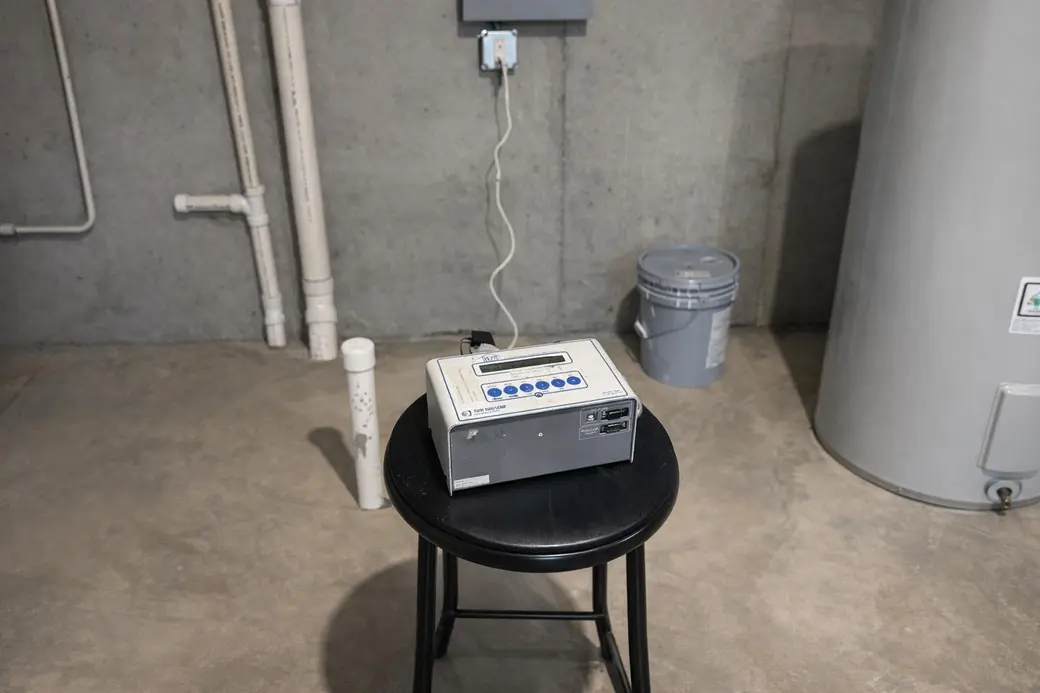
Radon testing can be performed using approved do-it-yourself test kits or by a qualified professional.
For real estate transactions, many buyers choose a professional radon test because the results may be relevant to negotiations.
Virginia requires professional radon testers and mitigation providers to hold recognized qualifications, including certification through the National Radon Proficiency Program (NRPP) or National Radon Safety Board (NRSB).
You can find qualified professionals through the Virginia Department of Health's Indoor Radon Program.
Official resource:
https://www.vdh.virginia.gov/radiological-health/indoor-radon-program/
How Long Does a Radon Test Take?
A short-term radon test typically lasts between two and 90 days, depending on the device.
For time-sensitive real estate transactions, qualified professionals commonly use testing methods that produce results more quickly.
EPA guidance for real estate transactions includes short-term testing options lasting at least 48 hours.
Proper testing conditions are essential.
For certain short-term tests, windows and exterior doors must remain closed for at least 12 hours before the test begins and throughout the testing period, except for normal entry and exit.
The testing professional should explain the correct requirements.
Buyer tip: Arrange testing early enough to receive and review the results before your inspection or other relevant contract deadlines expire.
4. Know What Radon Test Results Actually Mean
Radon levels in indoor air are measured in picocuries per liter, written as pCi/L.
The EPA provides the following guidance:
Below 2 pCi/L
This is below the EPA's recommended action level.
However, no level of radon exposure is completely risk-free.
Between 2 and 4 pCi/L
The EPA recommends considering radon reduction even when the level is below 4 pCi/L.
Buyers may want to discuss the results with a qualified radon professional.
4 pCi/L or Higher
The EPA recommends taking action to reduce elevated indoor radon levels.
When interpreting results, remember that measurements can vary depending on the season, weather, testing method, and conditions inside the home.
If an initial test identifies elevated levels, the appropriate follow-up depends on the testing method and the result.
A qualified professional can explain whether additional testing is needed and what action is recommended.
Important: A radon result below 4 pCi/L does not mean the home is guaranteed to be completely free of radon-related risk.
5. Find Out Whether the Home Already Has a Radon Mitigation System
Some homes already have systems installed to reduce indoor radon levels.
These are called radon mitigation systems.
One common approach is known as sub-slab depressurization.
This system typically uses piping and a fan to draw radon-containing soil gas from beneath the home and release it outdoors.
If you're considering a property with an existing mitigation system, ask:
-
When was the system installed?
-
Who installed it?
-
Are installation records available?
-
Has the system been maintained?
-
Is the fan operating properly?
-
When was the last radon test performed?
-
Are post-installation test results available?
A mitigation system can be a useful feature, but its presence does not automatically prove that current radon levels are acceptable.
The EPA recommends testing after mitigation work to confirm that the system is effective.
A qualified radon professional can also evaluate whether the equipment is operating correctly.
Buyer tip: Request both the system documentation and recent radon test results.
6. Understand What Happens If the Home Tests High for Radon
Suppose you're buying a home in Dale City and the radon test identifies an elevated level.
Does that mean you should immediately walk away from the purchase?
Not necessarily.
Many homes with elevated radon can be successfully mitigated.
However, it's important to understand your options before making a decision.
Depending on your purchase agreement and applicable contingencies, you may be able to discuss the findings with the seller.
Possible negotiated solutions include:
Seller-Installed Mitigation
You may request that the seller arrange for an appropriate radon reduction system to be installed before closing.
Buyer-Arranged Mitigation
The parties may agree on an arrangement that allows the buyer to complete mitigation after purchasing the home.
Negotiated Seller Credit
The seller may agree to provide an eligible closing-cost credit, subject to lender requirements.
Additional Testing
The parties may agree to further testing when appropriate.
Contractual Termination
If your agreement provides a valid right to terminate and the required procedures are followed, ending the transaction may be an available option.
These outcomes are not automatic, and a seller is not necessarily required to install a radon mitigation system simply because testing identifies elevated levels.
The most important step is reviewing the results, understanding the potential costs, and following the terms of your purchase agreement.
7. Get a Radon Mitigation Estimate Before Closing
If elevated radon levels are discovered, ask a qualified radon mitigation professional to evaluate the property.
The installation cost depends on several factors, including:
-
Foundation type
-
Property size and layout
-
Soil conditions
-
Existing ventilation
-
Number of foundation sections
-
System design
-
Installation complexity
According to the Virginia Department of Health, many residential radon mitigation systems cost approximately $800 to $2,500, although more complex properties may cost more.
These are general estimates, not guaranteed local prices.
Request a written quote based on the actual property.
Before hiring a contractor, confirm their certification and ask about the proposed system, warranty, maintenance requirements, and follow-up testing.
What Happens After Installation?
A post-mitigation radon test should be completed to verify that the system has reduced indoor radon levels.
Ongoing testing is also important because building conditions and equipment performance may change over time.
Buyer tip: If mitigation is negotiated before closing, make sure the written agreement clearly addresses who completes the work, payment responsibilities, and whether verification testing is required.
Does Virginia Require Radon Testing Before Selling a Home?
Virginia's standard residential property disclosure process emphasizes buyer due diligence.
The Virginia Residential Property Disclosure Statement specifically advises purchasers to investigate radon-related concerns.
However, this does not mean every residential property sale automatically requires a radon inspection.
Testing may be requested by the buyer or addressed in the purchase agreement.
Buyers should also understand that certain disclosure or contractual obligations may apply depending on the circumstances.
The safest approach is to discuss radon testing before making an offer and ensure that the agreed inspection arrangements are documented.
Official resource:
https://www.dpor.virginia.gov/Consumers/Residential_Property_Disclosures/
Should You Accept an Older Radon Test From the Seller?
Not automatically.
A seller may provide a radon test completed several years ago.
While this information may be useful, it might not reflect current conditions.
The EPA explains that buyers may want a new test when:
-
The previous test is not recent, such as one performed more than two years ago.
-
The home has undergone significant renovations.
-
The previous test did not follow recommended procedures.
-
The buyer plans to occupy a lower level that was not previously tested.
For example, suppose you're purchasing a home in Lake Ridge with a newly finished basement.
Even if the seller has an older radon test from the main floor, additional testing may be appropriate.
Buyer tip: Review when, where, and how the previous test was conducted before deciding whether to rely on it.
Can Radon Affect the Value of a Home?
Radon concerns may influence a buyer's interest in a property.
However, finding an elevated radon level does not automatically mean a home has lost a specific percentage of its value.
The actual effect depends on the property's condition, available mitigation options, local market conditions, and buyer preferences.
A properly installed radon mitigation system with documented test results may help address buyer concerns.
When comparing homes in Woodbridge, Dale City, or other Prince William County communities, consider radon alongside other property-condition issues.
The asking price, location, layout, maintenance history, and overall market conditions remain important.
Frequently Asked Questions About Radon Testing
Is radon common in Prince William County, Virginia?
Radon is a potential concern throughout Virginia. The Virginia Department of Health reports elevated radon test results in every Virginia county, but individual homes must be tested to determine their levels.
How much does radon testing cost in Virginia?
The Virginia Department of Health reports that professional radon testing often costs approximately $100 to $200, depending on the testing method and provider. Actual prices may vary.
Can a house without a basement have elevated radon?
Yes. Radon can enter homes with different foundation types, including slab-on-grade construction and crawl spaces.
Is a radon level of 3 pCi/L safe?
A reading of 3 pCi/L is below the EPA's 4 pCi/L action level, but it does not mean there is zero risk. The EPA recommends considering mitigation for readings between 2 and 4 pCi/L.
Can radon levels change over time?
Yes. Levels can vary with weather, seasonal conditions, building changes, and ventilation patterns.
Does a radon mitigation system require maintenance?
Yes. Systems should be monitored and maintained according to the installer's recommendations, and periodic testing helps confirm continued performance.
Can I buy a home that has previously tested high for radon?
Potentially. Many elevated radon problems can be mitigated. Review the available records, obtain professional guidance, and understand any necessary work before deciding.
Buying a Home in Prince William County? Make an Informed Decision
Finding the right home involves more than choosing your preferred neighborhood, floor plan, or price range.
Understanding potential environmental concerns, including radon, can help you evaluate a property more carefully.
Whether you're considering homes in Woodbridge, Dale City, Lake Ridge, Dumfries, Manassas, or elsewhere in Prince William County, appropriate inspections and professional advice are important parts of the buying process.
Josue Ruiz | Ruiz Realty Group helps buyers explore local neighborhoods, evaluate available properties, and navigate the Northern Virginia real estate market.
Ready to Find Your Next Home in Prince William County?
Explore your options and connect with Josue.
Visit: https://realtorforvirginia.com/
Josue Ruiz | Ruiz Realty Group | Samson Properties
Call or Text: (703) 975-0021
Your Local Real Estate Resource in Prince William County, Virginia.
Disclaimer: This article provides general real estate information and is not medical, environmental, legal, or financial advice. Radon testing, mitigation recommendations, and contract decisions should be discussed with qualified professionals.
Categories
Recent Posts



"My job is to find and attract mastery-based agents to the office, protect the culture, and make sure everyone is happy! "