Buying a Home With a Private Well in Nokesville, VA? 7 Things to Check Before Closing

If you're planning to buy a home in Nokesville, Manassas, Bristow, Gainesville, or western Prince William County, Virginia, you may come across properties that get their drinking water from a private well instead of a public water system.
For some buyers, a private well is completely new territory.
You might be wondering:
"How do I know if the well water is safe, and what happens if the system has problems after I buy the house?"
These are important questions to ask before closing.
A private well can provide a dependable water supply, but it also comes with maintenance and testing responsibilities that homeowners connected to a public water system may not have.
Before purchasing a home with a private well in Prince William County, here are seven things to check.
1. Find Out What Type of Water System Serves the Property
Not every home in Prince William County gets water from the same source.
Some properties are connected to public water systems, while others rely on privately owned wells.
Private wells are more likely to be encountered when exploring certain larger-lot and rural-style residential properties.
Before making an offer, ask:
-
Does the home use a private well or public water?
-
Is the well located on the property?
-
Is the water source shared with another property?
-
Are there recorded agreements affecting access or maintenance?
-
Does the owner have documentation about the system?
If a well is shared, it's especially important to understand the legal arrangements and responsibilities associated with its use.
Buyer tip: Don't assume that a property has public water simply because it's located near an established neighborhood.
2. Test the Well Water Before Closing
One of the most important steps when buying a home with a private well is evaluating the drinking water quality.
Unlike public water systems, private wells are not subject to the same ongoing government water-quality monitoring requirements.
The Virginia Department of Health (VDH) explains that existing private wells are generally the homeowner's responsibility.
Virginia does not automatically require water-quality testing every time a home with a private well is sold.
However, your mortgage lender, purchase agreement, or applicable local requirements may call for testing.
Even when testing isn't required, it can provide valuable information about the water you and your family may use every day.
Common testing considerations include:
-
Total coliform bacteria
-
E. coli bacteria
-
Nitrates
-
Lead
-
Arsenic and other naturally occurring contaminants where relevant
-
Other substances based on the property's location and potential contamination sources
Not every test package checks for the same contaminants.
Important: A water test that checks only for bacteria does not automatically confirm that the water is free of chemical contaminants.
Ask a qualified water-testing professional which tests are appropriate for the property.
Official resource:
https://www.vdh.virginia.gov/environmental-health/private-well-program/
3. Arrange a Professional Well System Inspection
Water quality is important, but it isn't the only concern.
You should also understand whether the well system can reliably deliver water to the home.
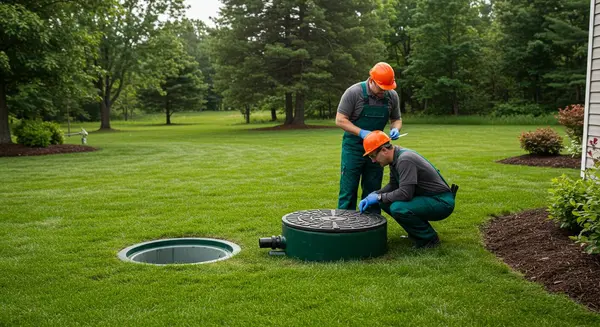
A professional inspection may evaluate:
-
The wellhead and visible protective components
-
The water pump
-
The pressure tank
-
Relevant plumbing and controls
-
Water pressure and system operation
-
Signs of leaks or equipment problems
-
Available information about water flow and recovery
For example, a home may have acceptable water-quality test results but still experience problems with the pump or pressure system.
A general home inspection may not fully assess these components.
The Virginia Department of Health recommends using a licensed water well service provider for a stand-alone well inspection.
Before hiring someone, confirm the inspection scope and whether additional water flow or yield testing is appropriate.
Buyer tip: A qualified well inspection can help you understand potential repair or maintenance issues before taking ownership.
4. Locate the Well Permit and Construction Records
When purchasing a home with a private well, it's helpful to know when and how the well was constructed.
The Prince William Health District maintains historical records relating to private wells and onsite sewage systems.
Its document database may contain information such as:
-
Well construction permits
-
Installation or completion records
-
Available inspection information
-
Property-specific records
-
Certain documents relating to onsite water systems
You can search available records using the property's address or GPIN.
However, the amount of information available may vary depending on the property's age and the records retained.
If documentation is missing, ask the seller whether additional records are available from the original installer or previous owners.
Official resource:
https://www.vdh.virginia.gov/prince-william/environmental-health/onsite-sewage-and-water-services/
Knowing the system's history can help buyers prepare for future maintenance and repairs.
5. Understand the Costs of Owning a Private Well
A private well may eliminate a recurring bill for water supplied by a public utility, but it does not provide water without any ownership expenses.
You may still have costs related to:
-
Electricity used by the well pump
-
Periodic water-quality testing
-
Water filters or treatment equipment
-
Pump and pressure tank maintenance
-
Well inspections
-
Repairs to pipes or other system components
-
Future equipment replacement
For example, if a water test identifies elevated levels of a particular contaminant, treatment equipment may be recommended.
The appropriate treatment depends on the specific contaminant and test results.
Buyers should obtain professional advice and cost estimates before assuming a treatment system will solve every issue.
Buyer tip: Compare the property's ongoing maintenance responsibilities with your overall housing budget.
6. Check the Location of the Well and Nearby Potential Contamination Sources
Where a well is located can matter.
Possible contamination sources may include septic systems, certain agricultural activities, fuel storage, or other nearby activities.
Virginia's private well regulations establish construction and separation requirements for new wells.
However, evaluating an existing well requires looking at the property's particular circumstances and applicable standards.
When visiting the home, consider asking:
-
Where is the well located?
-
Is the wellhead protected from surface water entering?
-
Are there potential contamination sources nearby?
-
Have any previous water-quality problems been reported?
-
Are relevant maintenance or treatment records available?
If the property also uses a septic system, consider a separate evaluation of that system.
A septic inspection and a well-water test address different concerns.
Don't rely on appearance, taste, or smell alone to determine whether drinking water is safe.
7. Confirm Your Mortgage and Contract Requirements
Private wells can also affect the homebuying process.
Certain mortgage lenders may require additional documentation, water testing, or system evaluations before approving the purchase.
The exact requirements depend on the loan program and lender.
For example, buyers using a VA, FHA, or conventional mortgage should ask their lender whether the proposed property's water system requires any additional testing or documentation.
Before making an offer, discuss:
-
Required water-quality testing
-
Acceptable laboratories and sampling procedures
-
Whether a professional well inspection is needed
-
Who will arrange and pay for the tests
-
What happens if testing identifies a problem
-
Relevant inspection and financing deadlines
A well-related concern discovered shortly before closing may create delays if additional testing or repairs are required.
The best approach is to understand these requirements early instead of waiting until the final stages of the transaction.
Is a Private Well Better Than Public Water?
Neither option is automatically better for every homeowner.
A private well offers a different arrangement for water supply, ownership, and maintenance.
Some buyers appreciate having their own water source.
Others prefer the convenience of a public utility that handles system-level water treatment and monitoring.
Your decision should consider the well's condition, water quality, available records, maintenance responsibilities, and the property's overall suitability.
A properly functioning private well can be a practical feature, but buyers should understand what ownership involves.
Frequently Asked Questions About Buying a Home With a Private Well
Is a well inspection required when buying a house in Virginia?
Virginia does not have a universal private well inspection requirement for every real estate transfer. However, local requirements, lenders, or purchase contracts may require additional evaluations.
How do I know whether private well water is safe to drink?
Have the water tested by an appropriate laboratory. Testing recommendations depend on the water source and potential contaminants.
Who is responsible for maintaining a private well?
The property owner is generally responsible for the operation, maintenance, and water quality of a privately owned well.
Can a private well run out of water?
A well's water availability can be influenced by groundwater conditions, well construction, usage, and other factors. If you have concerns, discuss appropriate yield testing with a qualified well professional.
Can I buy a home if the well-water test identifies a problem?
That depends on the findings, available treatment or repair options, lender requirements, and your purchase contract. Seek qualified advice before proceeding.
Should I test well water even if the seller says it's safe?
Yes. A recent laboratory test can provide more useful information than relying only on the seller's experience with the system.
Buying a Home in Nokesville or Prince William County?
Finding the right home involves more than choosing the number of bedrooms, square footage, or lot size.
Understanding the property's water system, inspection requirements, and maintenance responsibilities can help you make a more informed decision.
Whether you're exploring homes in Nokesville, Manassas, Bristow, Gainesville, or surrounding Prince William County communities, knowing what to check before closing is an important part of the buying process.
Josue Ruiz | Ruiz Realty Group helps homebuyers explore available properties and navigate the Northern Virginia real estate market.
Thinking About Buying a Home in Prince William County?
Start your home search and connect with Josue to discuss your real estate goals.
Visit: https://realtorforvirginia.com/
Josue Ruiz | Samson Properties
Call or Text: (703) 975-0021
Your Local Real Estate Resource in Prince William County, Virginia.
Disclaimer: This article is for general real estate information and does not replace professional water testing, well inspections, environmental evaluations, legal advice, or lender guidance.
Categories
Recent Posts



"My job is to find and attract mastery-based agents to the office, protect the culture, and make sure everyone is happy! "